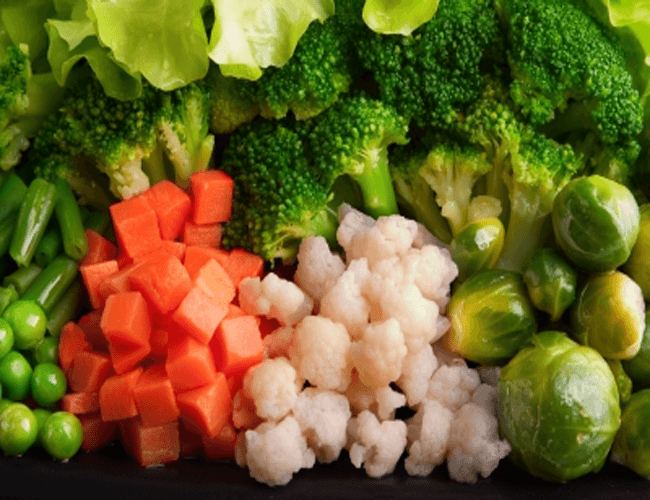
Tag: vegetables

  • Carrots, Squash, Peas and Watermelon –Are They Misunderstood by the Low-Carb Crowd?

    Carrots, Squash, Peas and Watermelon –Are They Misunderstood by the Low-Carb Crowd?


    ID-100199480
    Image courtesy of FreeDigitalPhotos.netDo you fear eating bananas? It sounds silly, but how many low carb diets have told you that you have to stay away from certain foods, like bananas or starchy vegetables like squash? I’m going to tell you why that’s not necessarily true. We first have to understand the difference between the glycemic index and the glycemic load.

    Both are measurements of a foods effect on your blood sugar. Here’s the fine print, glycemic index is based on a fifty gram portion of carbohydrate. By the way, that’s what we call net carbohydrates, or total carbs minus fiber, because fiber doesn’t have any impact on blood sugar. So, if it was twenty grams of carbs and ten of them were fiber, you’re looking at ten grams of carbohydrates. What’s left there, that carbohydrate content, is what actually impacts your blood sugar.

    The glycemic index looks at what happens to your blood sugar when you eat a fifty gram portion of net carbs of any given food. The problem is it’s a very arbitrary amount. To get fifty grams of net carbs with a carrot, you’d have to eat a bushel. While fifty grams of net carbs might be a very high amount for carrots, it’s a tiny amount when you’re eating pasta at the Olive Garden, which is much more likely to have two hundred grams of net carbs per oversized portion. That’s where the glycemic load comes in; it takes into account how much of the carb food you’re actually going to be eating. That’s a critical difference. Here’s an example, let’s say East African Saffron is three hundred dollars a pound. Wow, that’s a lot of money, right? Except that your recipe only calls for a half teaspoon, which is going to cost you eighty cents. Glycemic index is like the three hundred dollar per pound price, but glycemic load is what you’re going to pay at the checkout line.

    Now, go back to carrots. If you look at the real life portion of carrots, the actual glycemic load is tiny. Glycemic load is what we should be looking at, because it reflects real life portions. Knowing that, let’s look at some of the forbidden foods and see what they really do to blood sugar. Get ready to be surprised. For reference, glycemic load of zero to ten is considered low, ten to twenty is considered medium and anything over twenty is considered high. Let’s start with squash: four ounces, a nice size portion, is only a four. One cup of chopped summer squash has a glycemic load of two. How about bananas? A lot depends on their size and their ripeness. The larger bananas get up there in the eleven to twelve range, that’s still the low end of the medium range. Here’s one that’s going to kill you, watermelon. If you had a whole cup of watermelon balls that’s a glycemic load of three. Now, if you ate the whole fifteen inch melon, the glycemic load is off the charts, it’s ninety three. The moral of the story is, don’t eat the whole melon!

    Peas are a really interesting case. We’re always told to, “Lay off the peas, lay off the carrots.” A whole cup of peas has a glycemic load of nine. It’s approaching middle territory, but it’s safely within the low zone and has nine grams of fiber. Compare that to bread. Like the great nutritionist, C. Leigh Broadhurst, once told me, “No one ever became diabetic by eating peas and carrots.” The point is not to stuff yourself with sweet foods. Some foods that have a really crummy reputation among the low carb crew, really don’t deserve that reputation. You can eat some of them, if you watch the portions, without knocking your blood sugar out of whack.



  • Delicious Ways to Enjoy Vegetable Juicing for Weight Loss

    Delicious Ways to Enjoy Vegetable Juicing for Weight Loss

    The following is from Jonny Bowden’s New You In 22.

    Delicious Ways to Enjoy Vegetable Juicing for Weight Loss


    Many heath experts, myself included,  are advocates of vegetable juicing for weight loss, and will easily recommend vegetable juices as part of an effective weight loss plan.

    The thing is most people are not fond of vegetables. If you are one of these people, here are delicious ways to enjoy vegetable juices and benefit from their weight loss abilities.

    Gourmet Green Drink

    Contrary to common belief, green drinks are actually delicious. You can choose from any or a combination of the following for your green drink recipe:

    • Wheatgrass
    • Barley grass
    • Magma
    • Broccoli
    • Spinach
    • Kale
    • Parsley
    • Other green leafy vegetables

    Drinking your greens make vegetable consumption more palatable for fussy eaters or for those who are not fond of veggies. This is one delicious way to meet your recommended vegetable servings for weight loss.

    Some of the remarkable benefits you can get from your green drink are the following:

    1. Excellent source of nutrients that will allow you to stay healthy while dropping the pounds fast.
    2. Purifies your blood and removes the toxins from your body. Toxic substances interfere with the functions of your body systems resulting in poor health condition including excessive weight.
    3. Promotes overall health condition, and increases your energy levels to do all the activities you plan to do throughout the day.

    Smoothie Your Greens

    One of the more effective ways to lose weight healthily is to drink protein shakes for breakfast. You can create your own drink by juicing your green vegetables. For variety, you can create succulent green smoothies that will give you the following benefits:

    • Your body receives plant-based protein. In many ways, plant-based protein is healthier than animal-based protein. Veggies contain chlorophyll rich in alkaline.This will restore the good balance between alkaline-acid in your body, considering that the American diet today is highly acidic. The good balance of acid-alkaline is essential in weight management.
    • Vegetables are an excellent source of fiber. WebMD, in fact, recommends the consumption of fiber-rich food for weight loss. Health experts say that dietary fiber has that power to fill your stomach without the risks of storing unnecessary fats in the body.In a study that monitors the big weight losers, most of these individuals are habitual breakfast eaters with fiber-rich food as part of their staple meals.
    • Juicing your veggies makes it easier for your body to absorb the nutrients. As soon as the smoothie touches your mouth, digestion and abruption of nutrients begin.

    Vegetable juicing for weight loss will turn green veggies into an appetizing beverage that adults and kids will both love. According to Dr. Jonny Bowden, juicing is at its best when you use green vegetables as ingredients.

    Easy Recipes

    Here are three vegetable juice recipes that are easy to prepare and will deliver weight loss benefits to your body:

    Raw Chlorophyll Juice – Just combine all the ingredients below into your juicer:

    • Spinach
      Dandelion greens
      Parsley

    You may want to add the following fruits for flavor: apples and grapes.

    Easy Green Juice – extract the juice from the following ingredients:

    • 3 stalks of celery
    • About 10 pieces of lettuce leaves
    • 1 ½ green apple

    Kale Cool Aid Juice – juice the following ingredients and combine the extract together. Serve with ice.

    • About 5 pieces of kale leaves
    • 2 large cucumbers
    • 1 piece green apple
    • 1 piece of lemon, peeled
    • Thumb-sized ginger, peeled
    • 2 ribs of celery

    Tips for Juicing Your Veggies

    There is no doubt to the health power of vegetables. Using veggies as your ingredients to create weight loss juices can be as refreshing and as delicious as natural fruit juices by following these tips:

    1. Add apples or carrots to your recipes, as they are natural sweeteners. These two are also able to break the bitter taste of some vegetables.
    2. Prefer to juice fresh vegetables (also fruits), and as much as possible choose organic. Fresh organic veggies are superior in nutritional and health value.
    3. Your choice of juicer also matters. If you wish to maximize the weight loss and other health benefits of juicing your veggies, choose a good quality juicer.
    4. Mix and match your veggies, and include some fruits to your recipes. The trick is to create varied delicious-tasting recipes. The web has all the resources you need to help you.

    Start to benefit from your vegetable juice right now and enjoy the healthy results!


  • 150 Healthiest Foods: Green Beans

    150 Healthiest Foods: Green Beans

    The folate (folic acid) in green beans lowers the inflammatory compound called homocysteine which is usually high in people with heart disease and Alzheimer’s.

  • Vegetables and Fruits Lower Risk of Dying by 22%

    Vegetables and Fruits Lower Risk of Dying by 22%

    One of the largest studies of links between diet and heart disease was recently completed. The results were very clear: people who consume more fruits and vegetables have a lower risk of dying from heart disease.

    Most readers already suspected that. But what makes this study great is that it shows exactly how many fruit and vegetables you need and exactly the degree of protection against heart disease you’ll get for your efforts.

    The study—known as EPIC, or European Prospective investigation into Cancer and Nutrition– showed that people who ate at least eight 3-ounce portions of fruit and vegetables a day had a 22% lower risk of dying from heart disease than did those who consumed fewer than three portions. (A portion is roughly equivalent to a small banana, a medium apple, or a carrot.

    According to the lead researcher, Dr. Francesca Crowe, every additional portion of fruit or vegetables above 2 a day reduced your risk of dying from heart disease by 4%.

    Each and every portion.

    (A related study found that every two servings of total fruits and veggies also reduces the incidence of cancer by 4%.)

    Think about that for a sec. If there was a pill with no side effects that you could pop a bunch of times a day and every time you took one your risk for dying dropped 4% would you take it?

    In this study—which by the way included 300,000 people in eight different European countries—a person who ate 3 portions a day of veggies or fruits was 4% less likely to die over the course of the study than someone who ate 2 portions; and those 4%’s keep adding up, all the way up to 8 portions a day.

    The researchers found that the average intake of fruit and vegetables was five portions a day; people in Greece, Italy and Spain ate more, and those in Sweden ate less.

    That means, if you’re consuming five a day, you could lower your risk of dying from heart disease a hefty 12% more just by adding three more servings of vegetables a day. (And those are small servings we’re talking about!)

    Sir Michael Marmot head of the UCL Department of Epidemiology and Public Health writes “There would need to be big shift in dietary patterns to achieve this healthy consumption of eight portions a day. It is worth trying to move in that direction.”