Tag: omega 3

  • Jonny’s Mega Omega Salmon in a Snap

    Jonny’s Mega Omega Salmon in a Snap

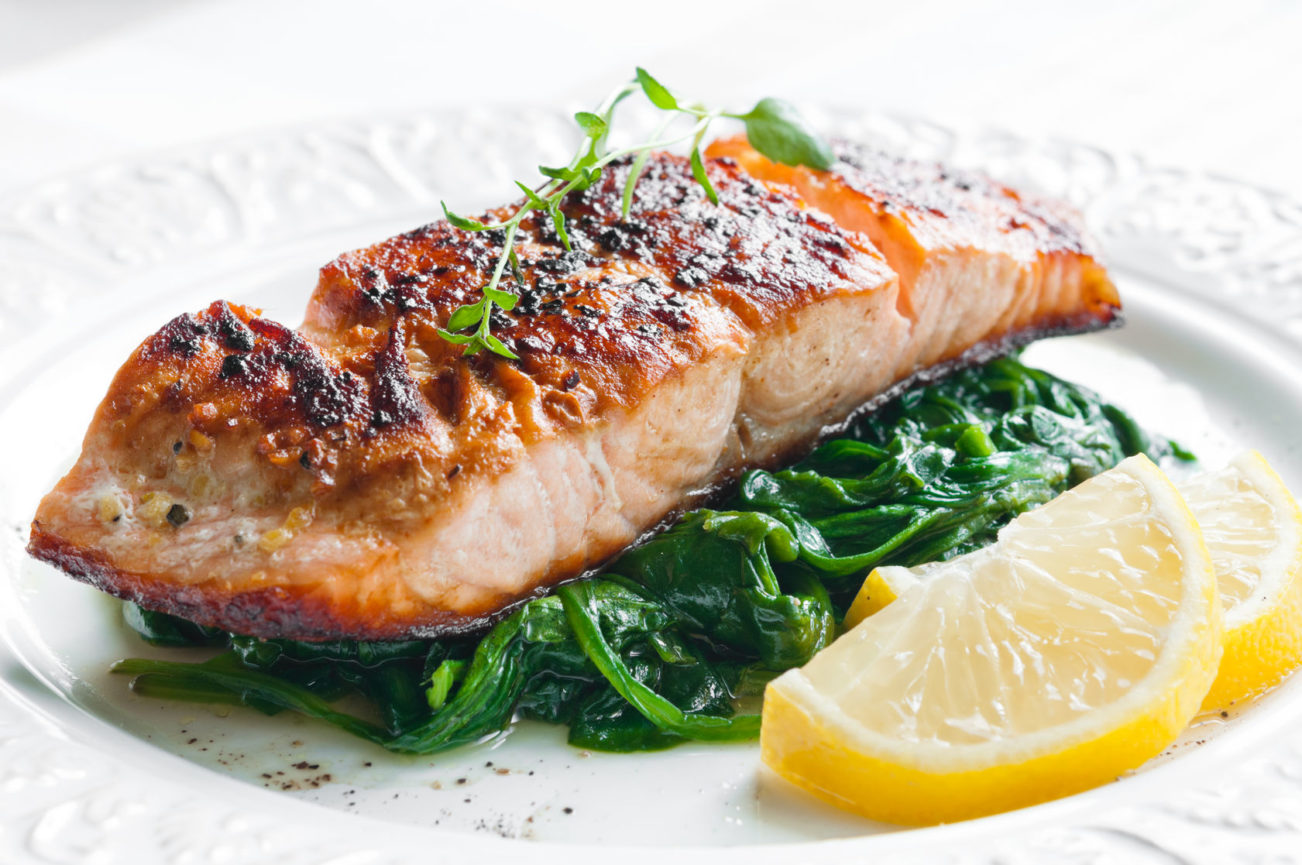
    Wild salmon blends beautifully with sauteed spinach, and when both are lightly cooked in the best coconut oil on the planet, the resulting taste is superb. I love the organic spice pack that comes with the salmon I get from Vital Choice, but you can make your own spice mix or use salt and pepper– just don’t forget the turmeric. Turmeric is the superspice of all time, having both serious anti-inflammatory properties and some anticancer activity as well.

    Ingredients:

    1 ½ tablespoons (25ml) Barlean’s coconut oil
    4 Vita Choice Wild Alaskan Skinless Salmon fillets (6 ounces or 170 g each), thawed
    2 Vita Choice organic spice packs (included with salmon order, or use salt and pepper to taste)
    1 bag (6 ounces or 170 g) triple-washed baby spinach
    1 teaspoon on turmeric
    ¾ teaspoon lemon pepper
    2 tablespoons (28 ml) water
    2 teaspoons butter

    Instructions:

    Heat the coconut oil in a large Dutch oven over medium-high heat. Add the salmon fillets to the pan and sprinkle Vita Choice spice packs to taste over the surface or fillets. Sear for 1 minute or until lightly browned. Flip and sear the uncooked side for 1 minute, sprinkling the spice packs on the seared sides, to taste. Reduce the heat to medium low and add the spinach.

    Sprinkle the turmeric and lemon pepper over the spinach and add the water. Cover for 2 minutes. Remove the cover, add the butter, stir, and recover for about 1 to 3 minutes or until the salmon is cooked to your liking, Do Not Overcook!

  • Tip 281: Increase Fat Burning During Exercise

    Tip 281: Increase Fat Burning During Exercise

    The following is a guest article by my good friend and colleague, Charles Poliquin.

    Tip 281: Increase Fat Burning During Exercise with Strategic Nutrition to Get Lean

    by Charles Poliquin

    Increase your rate of fat burning while strength training with optimal pre-workout nutrition to get lean. By eating the right nutrients before working out, you can increase work capacity, performance, and speed recovery from intense exercise. Many misconceptions exist about the best way to burn the most fat during exercise but a review in the British Journal of Nutrition provides a guide to get leaner and stronger.

    Proven strategies to boost fat burning with pre-workout nutrition include the following:

    1. Eat low-glycemic carbs with protein before training
    2. Avoid fructose and milk
    3. Load l-carnitine in the muscles
    4. Drink caffeinated green tea
    5. Take fish oil

    Pre-workout nutrition may influence the rate of fat burning when exercising by as much as 66 percent. Burning fat rather than carbohydrates during strength training is best because it can lead to the best body composition. If you’re doing endurance or high-intensity interval training, burning fat will increase your performance and time to exhaustion because increasing the use of fat for fuel spares glycogen (fuel source from carbohydrates).

    Eat low-glycemic carbs with protein at least an hour before training to maximize fat burning. Low-glycemic carbs include green vegetables, some fruits, and grains that have a glycemic-lowering nutrient added to them like rye bread with fenugreek. Low-glycemic carbs will produce a slow, gradual increase in blood sugar to support energy levels and fat burning because it will reduce pre-exercise muscle glycogen concentration and increase the availability of fat use for fuel. Basically, by eating this way, you’re telling your body what to burn and when to burn it to produce the most energy.

    Fructose is a sugar that is found in fruit and is everywhere in processed foods in the form of high-fructose corn syrup. Avoid it pre-workout. Limit fructose in your diet because it blunts fat burning but it also lowers the glycemic response of carbohydrates—just not in a favorable way for overall metabolism. Eating fructose actually inhibits fat burning during and after exercise to a greater extent than eating high-glycemic carbs with glucose like bread or cereal. Not only does fructose stop the use of fat for energy, it makes the cells more resistant to insulin, putting you at risk for diabetes. It also leads to higher blood lactate concentrations during exercise. Greater lactate production will impede performance and is counterproductive.

    Along with avoiding fructose, stay away from milk proteins because they are particularly “insulinotropic,” which means that they will cause persistently high insulin levels. This puts you at greater risk of insulin resistance and diabetes.

    On the flipside, regularly taking fish oil in your pre-workout meal will improve fat burning and insulin sensitivity. Fish oil improves gene activity that tells the body to use fat for energy within minutes of ingesting it. Fish oil also increases blood flow to fat tissue, which is considered a limiting factor in the use of fat for fuel during exercise. Basically, fish oil is a highly liquid and permeable fat and it helps everything to move more fluidly in the body (like a well-oiled machine).

    Together with the amino acid composite l-carnitine, fish oil increases the transport of fats into the cells to be used for energy in the body. By raising the level of muscle carnitine, you make the body more efficient at processing fuel so that it can burn more fat, spare glycogen, clear lactate and bump up anabolic hormone response. Ideally, you want to take carnitine regularly to “load” it into the muscles, but you can also take it with your pre-workout meal for best results.

    Carnitine availability is reduced when muscle glycogen content is elevated, making it all the more important to ensure you are moderating your glycemic load before training. Carnitine will boost performance for strength athletes, but it’s especially effective at increasing performance during endurance exercise. One study indicated a 55 percent reduction in muscle glycogen use after carnitine loading for six month. The glycogen sparing effect of burning more fat means endurance athletes will be able to “tap into” these glycogen stores at the later stages of a race or training run.

    Green tea with caffeine is an awesome addition to any athlete’s diet because the antioxidant content in the tea combined with the caffeine can increase fat burning by up to 15 percent. It has also been shown to elevate fat burning for 24 hours after ingestion. Caffeinated coffee can also boost performance and fat burning, but recent evidence suggests green tea may be better. Include caffeine from both sources for best results.

    References:

    Gonzalez, J., Stevenson, E. New Perspectives on Nutritional Interventions to Augment Lipid Utilization during Exercise. British Journal of Nutrition. 2012. 107, 339-349.

    Fernandez, J., Da Silva-Grigolettos, M. A Dose of Fructose Induces Oxidative Stress During Endurance and Strength Exercise. Journal of Sports Science. 2009. 27(12), 1323-1334.

    Charles Poliquin, M.Sc., is one of the top strength and conditioning experts in the world. He’s trained olympic medalists in 12 different sports and has written many books and over 500 columns. His site,  http://www.strengthsensei.com/charles-poliquin/, is a terrific resource for real, science-based information about physical fitness.

  • Omega-3’s Reduce Stroke Severity

    Omega-3’s Reduce Stroke Severity

    ScienceDaily (Aug. 26, 2011) — A diet rich in omega-3s reduces the severity of brain damage after a stroke, according to a study conducted by Université Laval researchers.

    The team, co-directed by professors Jasna Kriz and Frédéric Calon, showed that the extent of brain damage following a stroke was reduced by 25% in mice that consumed DHA type omega-3s daily. Details of the study can be found on the website of the journal Stroke.

    Researchers observed that the effects of stroke were less severe in mice that had been fed a diet rich in DHA for three months than in mice fed a control diet. In mice from the DHA group, they saw a reduction in the concentrations of molecules that stimulate tissue inflammation and, conversely, a larger quantity of molecules that prevent the activation of cell death.

    “This is the first convincing demonstration of the powerful anti-inflammatory effect of DHA in the brain,” underscored Frédéric Calon of Université Laval’s Faculty of Pharmacy. This protective effect results from the substitution of molecules in the neuronal membrane: DHA partially replaces arachidonic acid, an omega-6 fatty acid known for its inflammatory properties.

    “The consumption of omega-3s creates an anti-inflammatory and neuroprotective environment in the brain that mitigates damage following a stroke,” summarized Jasna Kriz, of Université Laval’s Faculty of Medicine.

    “It prevents an acute inflammatory response that, if not controlled, is harmful to brain tissue.”

    Professor Calon believes that this anti-inflammatory effect is likely transferable to humans.

    “Since DHA is readily available, inexpensive, and reduces the risk of a number of health problems without causing significant side effects, the risk-benefit ratio tends to favor the regular consumption of fish or DHA,” he concluded.

  • New Study: Omega-3’s Reduce Anxiety

    New Study: Omega-3’s Reduce Anxiety

    A new study gauging the impact of consuming more fish oil showed a marked reduction both in inflammation and, surprisingly, in anxiety among a cohort of healthy young people.

    The findings suggest that if young participants can get such improvements from specific dietary supplements, then the elderly and people at high risk for certain diseases might benefit even more.

    The findings by a team of researchers at Ohio State University were just published in the journal Brain, Behavior and Immunity. It is the latest from more than three decades of research into links between psychological stress and immunity.

    Omega-3 polyunsaturated fatty acids, such as eicosapentaenoic acid (EPA) and docosahexaenoic acid (DHA), have long been considered as positive additives to the diet. Earlier research suggested that the compounds might play a role in reducing the level of cytokines in the body, compounds that promote inflammation, and perhaps even reduce depression.

    Psychological stress has repeatedly been shown to increase cytokine production so the researchers wondered if increasing omega-3 might mitigate that process, reducing inflammation.

    To test their theory, they turned to a familiar group of research subjects — medical students. Some of the earliest work these scientists did showed that stress from important medical school tests lowered students’ immune status.

    “We hypothesized that giving some students omega-3 supplements would decrease their production of proinflammatory cytokines, compared to other students who only received a placebo,” explained Janice Kiecolt-Glaser, professor of psychology and psychiatry.

    “We thought the omega-3 would reduce the stress-induced increase in cytokines that normally arose from nervousness over the tests.”

    The team assembled a field of 68 first- and second-year medical students who volunteered for the clinical trial. The students were randomly divided into six groups, all of which were interviewed six times during the study.

    At each visit, blood samples were drawn from the students who also completed a battery of psychological surveys intended to gauge their levels of stress, anxiety or depression. The students also completed questionnaires about their diets during the previous weeks.

    Half the students received omega-3 supplements while the other half were given placebo pills.

    “The supplement was probably about four or five times the amount of fish oil you’d get from a daily serving of salmon, for example,” explained Martha Belury, professor of human nutrition and co-author in the study.

    Part of the study, however, didn’t go according to plans.

    Changes in the medical curriculum and the distribution of major tests throughout the year, rather than during a tense three-day period as was done in the past, removed much of the stress that medical students had shown in past studies.

    “These students were not anxious. They weren’t really stressed. They were actually sleeping well throughout this period, so we didn’t get the stress effect we had expected,” Kiecolt-Glaser said.

    But the psychological surveys clearly showed an important change in anxiety among the students: Those receiving the omega-3 showed a 20 percent reduction in anxiety compared to the placebo group.

    An analysis of the of the blood samples from the medical students showed similar important results.

    “We took measurements of the cytokines in the blood serum, as well as measured the productivity of cells that produced two important cytokines, interleukin-6 (IL-6) and tumor necrosis factor alpha (TNFa),” said Ron Glaser, professor of molecular virology, immunology & medical genetics and director of the Institute for Behavioral Medicine Research.

    “We saw a 14 percent reduction in the amounts of IL-6 among the students receiving the omega-3.” Since the cytokines foster inflammation, “anything we can do to reduce cytokines is a big plus in dealing with the overall health of people at risk for many diseases,” he said.

    While inflammation is a natural immune response that helps the body heal, it also can play a harmful role in a host of diseases ranging from arthritis to heart disease to cancer.

  • Omega-3’s, Depression and Mood

    Omega-3’s, Depression and Mood

    Years ago, the late nutritionist Robert Crayhon was asked what the single best nutritional strategy for the health of the nation would be. His answer…

    “Make sure every pregnant woman supplements with fish oil!”

    He’s turning out to be right. Low levels of omega-3’s (the fats found in fish and flaxseed) have been linked to depression, ADD, lower intelligence, behavioral problems, concentration, violent behavior and even impaired vision(1,2).

    Fatty acids are considered “essential” when the body cannot make them, so it’s “essential” that you get them from the diet. There is one omega-6 (linolenic acid) that’s essential and one omega-3 (alpha-linolenic acid) but most people also include the other two omega-3 fats (DHA and EPA) under the heading “essential” even though the body can technically make those two fatty acids out of alpha-linolenic acid.

    The balance between omega-6 and omega-3 intake is utterly critical to human health. The perfect ratio is somewhere between 1:1 (omega 6: omega 3) and maybe 4:1. The average person in western society gets between 16:1 and 20:1 or even more. This has enormous consequences for a host of health conditions and symptoms.

    Researchers from INSERM (the French National Institute of Health and Medical Research) and their collaborators in Spain recently put mice on a diet high in omega-6’s (vegetable oils) and low in omega-3’s (in other words, the mouse version of the standard American diet). This imbalance produced significant consequences (all of them negative) on both brain activity and emotional behaviors. The researchers also noticed a significant increase in depressive behavior amongst the omega-3 deficient mice.

    “Our results can now corroborate clinical and epidemiological studies which have revealed associations between an omega-3/omega-6 imbalance and mood disorders” said the researchers.

    This is the omega 3 fish oil I take everyday.

    Bottom line: Take your omega-3’s every day. The benefits of omega-3’s are legion—for heart health, brain health, circulation, behavior and mood.

    Remember, there are three omega-3’s.. ALA (found in flaxseed), EPA and DHA (found in fish.) Be sure to get some every single day, preferably at least 1000mg of combined DHA and EPA, which are the two most researched omega-3’s for heart health and brain function.  If you’re using flaxseed oil as your sole source of omega-3’s, take one tablespoon for every 100 pounds of bodyweight.

    1) Andrew Stoll, MD, “The Omega-3 Connection” (Fireside Books)

    2) Joseph Maroon, MD “Fish Oil: The Natural Anti-Inflammatory” (Basic Health Books)