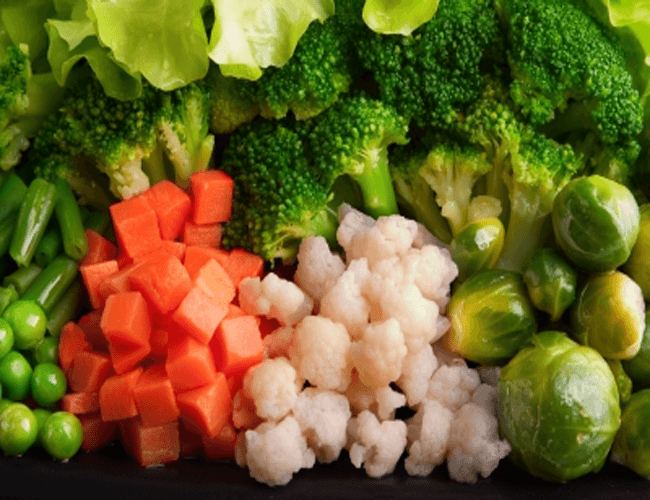
Tag: low carb

  • Carrots, Squash, Peas and Watermelon –Are They Misunderstood by the Low-Carb Crowd?

    Carrots, Squash, Peas and Watermelon –Are They Misunderstood by the Low-Carb Crowd?


    ID-100199480
    Image courtesy of FreeDigitalPhotos.netDo you fear eating bananas? It sounds silly, but how many low carb diets have told you that you have to stay away from certain foods, like bananas or starchy vegetables like squash? I’m going to tell you why that’s not necessarily true. We first have to understand the difference between the glycemic index and the glycemic load.

    Both are measurements of a foods effect on your blood sugar. Here’s the fine print, glycemic index is based on a fifty gram portion of carbohydrate. By the way, that’s what we call net carbohydrates, or total carbs minus fiber, because fiber doesn’t have any impact on blood sugar. So, if it was twenty grams of carbs and ten of them were fiber, you’re looking at ten grams of carbohydrates. What’s left there, that carbohydrate content, is what actually impacts your blood sugar.

    The glycemic index looks at what happens to your blood sugar when you eat a fifty gram portion of net carbs of any given food. The problem is it’s a very arbitrary amount. To get fifty grams of net carbs with a carrot, you’d have to eat a bushel. While fifty grams of net carbs might be a very high amount for carrots, it’s a tiny amount when you’re eating pasta at the Olive Garden, which is much more likely to have two hundred grams of net carbs per oversized portion. That’s where the glycemic load comes in; it takes into account how much of the carb food you’re actually going to be eating. That’s a critical difference. Here’s an example, let’s say East African Saffron is three hundred dollars a pound. Wow, that’s a lot of money, right? Except that your recipe only calls for a half teaspoon, which is going to cost you eighty cents. Glycemic index is like the three hundred dollar per pound price, but glycemic load is what you’re going to pay at the checkout line.

    Now, go back to carrots. If you look at the real life portion of carrots, the actual glycemic load is tiny. Glycemic load is what we should be looking at, because it reflects real life portions. Knowing that, let’s look at some of the forbidden foods and see what they really do to blood sugar. Get ready to be surprised. For reference, glycemic load of zero to ten is considered low, ten to twenty is considered medium and anything over twenty is considered high. Let’s start with squash: four ounces, a nice size portion, is only a four. One cup of chopped summer squash has a glycemic load of two. How about bananas? A lot depends on their size and their ripeness. The larger bananas get up there in the eleven to twelve range, that’s still the low end of the medium range. Here’s one that’s going to kill you, watermelon. If you had a whole cup of watermelon balls that’s a glycemic load of three. Now, if you ate the whole fifteen inch melon, the glycemic load is off the charts, it’s ninety three. The moral of the story is, don’t eat the whole melon!

    Peas are a really interesting case. We’re always told to, “Lay off the peas, lay off the carrots.” A whole cup of peas has a glycemic load of nine. It’s approaching middle territory, but it’s safely within the low zone and has nine grams of fiber. Compare that to bread. Like the great nutritionist, C. Leigh Broadhurst, once told me, “No one ever became diabetic by eating peas and carrots.” The point is not to stuff yourself with sweet foods. Some foods that have a really crummy reputation among the low carb crew, really don’t deserve that reputation. You can eat some of them, if you watch the portions, without knocking your blood sugar out of whack.



  • Are You Eating Candy Disguised as Breakfast?

    Are You Eating Candy Disguised as Breakfast?

    A British study looked at popular breakfast cereals and concluded most of them were so loaded with sugar, they belong in the candy aisle.

    Of the 50 cereals the study examined, 32 were high in sugar. That included 12 of the 14 cereals aimed at kids.

    Before you dismiss this as an irrelevant study because it occurred on the other side of the pond, I want to point out American breakfast cereals are just as bad and probably worse.

    Don’t believe me? Take a stroll down the cereal aisle at your local supermarket and check out a few labels.

    The study winner for added sugar was Kellogg’s Frosties, which packed an astounding 37% sugar. Store-brand chocolate rice cereals pulled a close second with 36% sugar. And several store-brand honey nut cornflakes had nearly 34% sugar.

    Even so-called healthy cereals in this study, such as Kellogg’s All-Bran Flakes and Special K, had 17 – 22% sugar.

    This study also found inconsistent nutrition labeling and serving size among cereals.

    What particularly drives me nuts (other than the high sugar) is that researchers neatly concluded since these cereals are fortified with vitamins and minerals, they could play a part in a “healthy balanced diet.”

    I want you to define the term “healthy balanced diet” for me. And while you’re at it, explain to me the “everything in moderation” theory.

    Chances are, I’ll get as many definitions as I have readers.

    Dieticians and other professionals like to throw these terms around like they actually mean something. Sorry, but they’re useless phrases that sound good on paper.

    But back to breakfast cereals.

    Despite whatever nutrients and even protein manufacturers add, cereal is predominantly a carbohydrate. Whether that cereal is chocolate nutty fruity pellets or Special K, it converts to mostly glucose in your body.

    So here’s a particular scenario. (When I say “you,” I mean hypothetically, since I know you’re smarter than to fall into this trap.)

    You see an ad that Special K can help you lose a certain amount of weight in two weeks. So your mornings start with a big bowl of this cereal in skim milk with a banana and a tall glass of orange juice.

    All in all, about 300 calories with almost zero fat. And probably some nonsense about whole grains too. What’s not to love about this breakfast?

    Plenty.

    For one, you’ve raised your blood sugar levels. That triggers your pancreas to release insulin, which among its other duties, stores fat.

    Around mid-morning, your blood sugar levels will crash, leaving you cranky and hungry.

    Chances are, you’ll visit the snack machine for low-fat chips or whatever. Maybe you’ll head to Starbucks for a 600-calorie low-fat muffin with a skim-milk latte. Or you’ll pull out a 100-Calorie pack, which again spikes and crashes your blood sugar and releases insulin. You might be so ravenous that you cave to those jelly donuts your receptionist brought in.

    Can you see the vicious cycle that’s playing out?

    There’s more. Your body can’t store protein. Let’s say you got sufficient protein for dinner the night before. You’re looking at about 12 hours your body has gone without fuel.  Guess where your body’s going to get that protein? From the precious muscle you worked so hard to build at the gym.

    To put things succinctly: when you eat cereal for breakfast, you’re setting yourself up for metabolic disaster all day. Fat burning is the last thing happening in your body.

    I think most people habitually eat cereal because it’s a fast, easy breakfast. So I want to propose some healthy, fat-burning alternatives that take about the same amount of time as breakfast cereal:

    1. PaleoMeal – this fantastic meal-replacement powder from Designs for Health comes loaded with 17 grams of high-quality whey protein plus fiber, vitamins, minerals, and other nutrients to keep you full and focused for hours.
    2. Eggs – keep some hard-boiled eggs in the fridge and you have instant breakfast.
    3. Nuts and seeds
    4. Leftovers – warm up last night’s salmon and spinach (or whatever you had) for a filling, delicious breakfast.
    5. Cottage cheese with walnuts
    6. Unsweetened Greek yogurt with frozen blueberries – particularly wonderful for summer mornings when it’s too humid to cook or do much else.
    7. Organic apple slices with almond butter
  • Tip 281: Increase Fat Burning During Exercise

    Tip 281: Increase Fat Burning During Exercise

    The following is a guest article by my good friend and colleague, Charles Poliquin.

    Tip 281: Increase Fat Burning During Exercise with Strategic Nutrition to Get Lean

    by Charles Poliquin

    Increase your rate of fat burning while strength training with optimal pre-workout nutrition to get lean. By eating the right nutrients before working out, you can increase work capacity, performance, and speed recovery from intense exercise. Many misconceptions exist about the best way to burn the most fat during exercise but a review in the British Journal of Nutrition provides a guide to get leaner and stronger.

    Proven strategies to boost fat burning with pre-workout nutrition include the following:

    1. Eat low-glycemic carbs with protein before training
    2. Avoid fructose and milk
    3. Load l-carnitine in the muscles
    4. Drink caffeinated green tea
    5. Take fish oil

    Pre-workout nutrition may influence the rate of fat burning when exercising by as much as 66 percent. Burning fat rather than carbohydrates during strength training is best because it can lead to the best body composition. If you’re doing endurance or high-intensity interval training, burning fat will increase your performance and time to exhaustion because increasing the use of fat for fuel spares glycogen (fuel source from carbohydrates).

    Eat low-glycemic carbs with protein at least an hour before training to maximize fat burning. Low-glycemic carbs include green vegetables, some fruits, and grains that have a glycemic-lowering nutrient added to them like rye bread with fenugreek. Low-glycemic carbs will produce a slow, gradual increase in blood sugar to support energy levels and fat burning because it will reduce pre-exercise muscle glycogen concentration and increase the availability of fat use for fuel. Basically, by eating this way, you’re telling your body what to burn and when to burn it to produce the most energy.

    Fructose is a sugar that is found in fruit and is everywhere in processed foods in the form of high-fructose corn syrup. Avoid it pre-workout. Limit fructose in your diet because it blunts fat burning but it also lowers the glycemic response of carbohydrates—just not in a favorable way for overall metabolism. Eating fructose actually inhibits fat burning during and after exercise to a greater extent than eating high-glycemic carbs with glucose like bread or cereal. Not only does fructose stop the use of fat for energy, it makes the cells more resistant to insulin, putting you at risk for diabetes. It also leads to higher blood lactate concentrations during exercise. Greater lactate production will impede performance and is counterproductive.

    Along with avoiding fructose, stay away from milk proteins because they are particularly “insulinotropic,” which means that they will cause persistently high insulin levels. This puts you at greater risk of insulin resistance and diabetes.

    On the flipside, regularly taking fish oil in your pre-workout meal will improve fat burning and insulin sensitivity. Fish oil improves gene activity that tells the body to use fat for energy within minutes of ingesting it. Fish oil also increases blood flow to fat tissue, which is considered a limiting factor in the use of fat for fuel during exercise. Basically, fish oil is a highly liquid and permeable fat and it helps everything to move more fluidly in the body (like a well-oiled machine).

    Together with the amino acid composite l-carnitine, fish oil increases the transport of fats into the cells to be used for energy in the body. By raising the level of muscle carnitine, you make the body more efficient at processing fuel so that it can burn more fat, spare glycogen, clear lactate and bump up anabolic hormone response. Ideally, you want to take carnitine regularly to “load” it into the muscles, but you can also take it with your pre-workout meal for best results.

    Carnitine availability is reduced when muscle glycogen content is elevated, making it all the more important to ensure you are moderating your glycemic load before training. Carnitine will boost performance for strength athletes, but it’s especially effective at increasing performance during endurance exercise. One study indicated a 55 percent reduction in muscle glycogen use after carnitine loading for six month. The glycogen sparing effect of burning more fat means endurance athletes will be able to “tap into” these glycogen stores at the later stages of a race or training run.

    Green tea with caffeine is an awesome addition to any athlete’s diet because the antioxidant content in the tea combined with the caffeine can increase fat burning by up to 15 percent. It has also been shown to elevate fat burning for 24 hours after ingestion. Caffeinated coffee can also boost performance and fat burning, but recent evidence suggests green tea may be better. Include caffeine from both sources for best results.

    References:

    Gonzalez, J., Stevenson, E. New Perspectives on Nutritional Interventions to Augment Lipid Utilization during Exercise. British Journal of Nutrition. 2012. 107, 339-349.

    Fernandez, J., Da Silva-Grigolettos, M. A Dose of Fructose Induces Oxidative Stress During Endurance and Strength Exercise. Journal of Sports Science. 2009. 27(12), 1323-1334.

    Charles Poliquin, M.Sc., is one of the top strength and conditioning experts in the world. He’s trained olympic medalists in 12 different sports and has written many books and over 500 columns. His site,  http://www.strengthsensei.com/charles-poliquin/, is a terrific resource for real, science-based information about physical fitness.

  • The Hidden Danger of Bread, Pasta and Rice

    The Hidden Danger of Bread, Pasta and Rice

    Consuming carbohydrates with a high glycemic index increases the risk of coronary heart disease in women, according to a new study in the Archives of Internal Medicine.

    If you’ve read my book “Living Low Carb: Controlled Carbohydrate Eating for Long-Term Weight Loss” then you probably understand the meaning of glycemic index. If you haven’t read the book, here’s the executive summary on glycemic index: it’s a measure of how quickly food affects your blood sugar. (more…)