Tag: healthy eating

  • Veggie Slaw with Flax Oil

    Veggie Slaw with Flax Oil

    Prep time: 20 minutes if hand cutting, 10 minutes with food processor

    Cook time: none but flavors improve with resting time a couple of hours


    Ingredients:

    2 1/2 tablespoons of flaxseed oil* (I recommend Barlean’s brand)
    2 1/2 tablespoons of raw apple cider vinegar
    2 1/2 tablespoons fresh lemon juice
    1/4 teaspoon sodium free lemon pepper
    Half small to medium head red or green cabbage cord, quartered, and finely sliced
    Three stalks broccoli, crowns removed, peeled, and thinly sliced
    4 carrots grated or thinly sliced
    4 stalks celery, finely sliced

    * you can also use extra-virgin olive oil

    In a large bowl combine oil vinegar lemon juice and lemon pepper and whisk together to combine. Add the cabbage broccoli carrots and celery. Toss to coat with dressing. Refrigerate for several hours. This will keep up for a week if you keep it cold and tightly sealed

    Yield 8 to 9 cups


  • Baby Spinach Salad with Fresh Raspberries

    Baby Spinach Salad with Fresh Raspberries

    Prep time: 5-10 min

    Cook time: none


    Ingredients:

    6 cups baby spinach
    ½ cup crumbled feta or goat cheese
    1/3 cup sliced almonds, walnuts or pecans
    1 cup fresh raspberries
    2 Tbsp. raspberry vinegar
    2 Tbsp. raspberry jam
    ½ tsp. Dijon mustard
    ½ tsp. raw honey


    In large salad bowl, combine the spinach, cheese, nuts, and raspberries.

    In a small bowl, whisk the vinegar, jam, mustard, and honey. Drizzle dressing over the top of salad and toss gently to coat. Serve immediately

  • Jonny’s Mega Omega Salmon in a Snap

    Jonny’s Mega Omega Salmon in a Snap

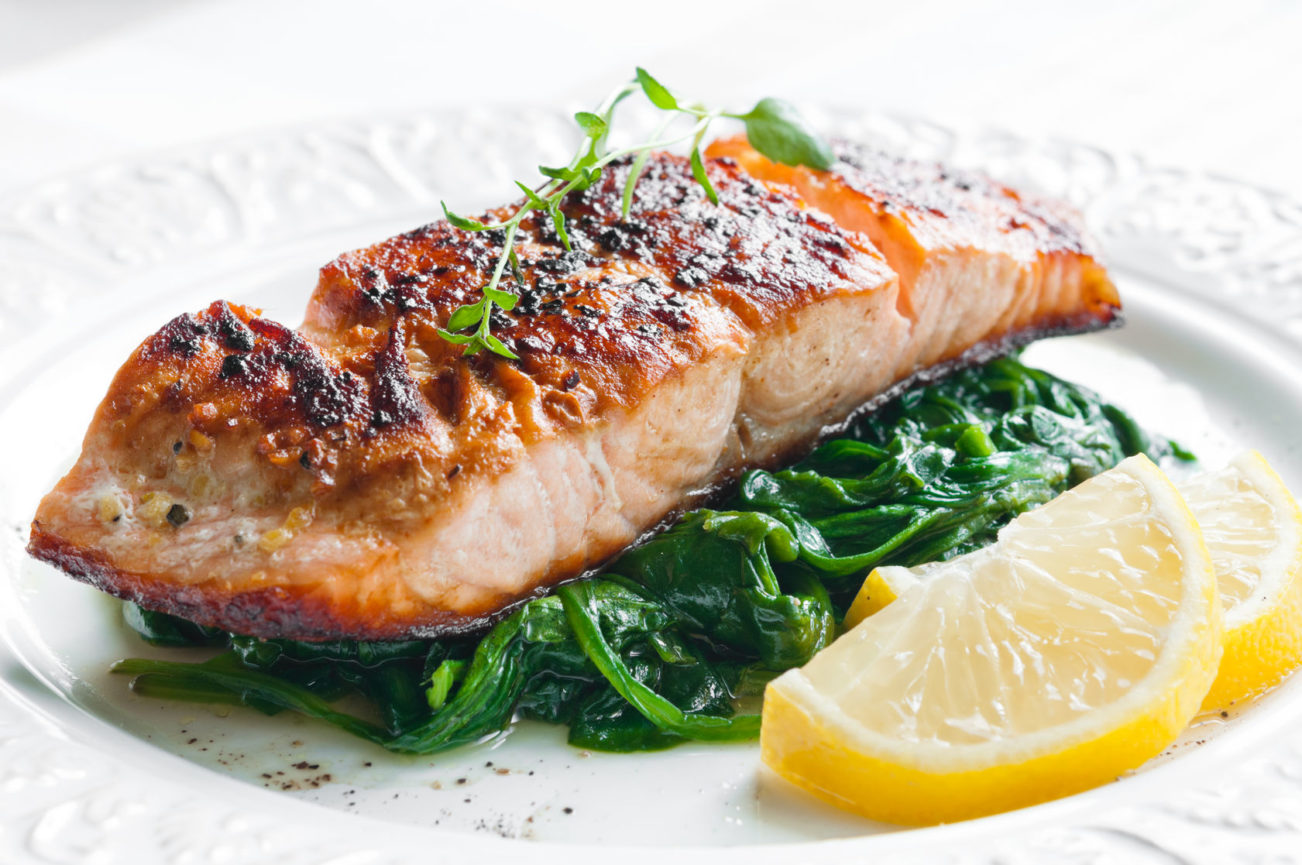
    Wild salmon blends beautifully with sauteed spinach, and when both are lightly cooked in the best coconut oil on the planet, the resulting taste is superb. I love the organic spice pack that comes with the salmon I get from Vital Choice, but you can make your own spice mix or use salt and pepper– just don’t forget the turmeric. Turmeric is the superspice of all time, having both serious anti-inflammatory properties and some anticancer activity as well.

    Ingredients:

    1 ½ tablespoons (25ml) Barlean’s coconut oil
    4 Vita Choice Wild Alaskan Skinless Salmon fillets (6 ounces or 170 g each), thawed
    2 Vita Choice organic spice packs (included with salmon order, or use salt and pepper to taste)
    1 bag (6 ounces or 170 g) triple-washed baby spinach
    1 teaspoon on turmeric
    ¾ teaspoon lemon pepper
    2 tablespoons (28 ml) water
    2 teaspoons butter

    Instructions:

    Heat the coconut oil in a large Dutch oven over medium-high heat. Add the salmon fillets to the pan and sprinkle Vita Choice spice packs to taste over the surface or fillets. Sear for 1 minute or until lightly browned. Flip and sear the uncooked side for 1 minute, sprinkling the spice packs on the seared sides, to taste. Reduce the heat to medium low and add the spinach.

    Sprinkle the turmeric and lemon pepper over the spinach and add the water. Cover for 2 minutes. Remove the cover, add the butter, stir, and recover for about 1 to 3 minutes or until the salmon is cooked to your liking, Do Not Overcook!

  • The Death of the American Breakfast Cereal?

    The Death of the American Breakfast Cereal?

    The cereal business is in the toilet.

    According to a report in the business section of the New York Times, sales of flaked cereals (like the iconic Corn Flakes) are down 5.5% and sales of all types of cereals are down 10.7%. The title of the print version of the article– Mikey Doesn’t Like It Very Much, Anymore– refers to the iconic 1974 television commercial in which two brothers are trying to get their very picky little brother to try a new “healthy” cereal called Life that neither of the brothers has any interest in eating.

    “Let’s get Mikey to try it”, one of them says. “He won’t like it. He hates everything.”

    Apparently, we are all Mikey now.

    To which I say, “Hallelujah, brother!”

    As someone who’s not exactly known for mincing words, let me be blunt: Cereal is crap. The overwhelming majority of it is processed dreck, nothing more than candy with a good PR campaign. The memes about cereal are implanted early in our lives—just think of your associations to Wheaties and Cherrios, two utterly useless food products each of which has over 20 grams of processed carbohydrates per serving. Wheaties in particular has benefited from one of the best public relations campaigns since “Betcha can’t eat just one”, which is why the first thing most of us think of when we hear “Wheaties” is “Breakfast of Champions”.

    If you think that crap is really the “breakfast of champions”, then I’ve got some really lovely property to sell you right under the Brooklyn Bridge.

    The god-awful, sclerotic American Dietetic Association—oh, excuse me, they’ve now renamed themselves the “American Academy of Nutrition and Dietetics”, since they apparently think that a new name will make them seem more relevant —has been shoveling the party line about cereal being a great source of fiber for as long as I can remember, but that’s a load of unmitigated do-do. The average cereal has about 2-3 grams of fiber per serving. Compare that to the 11-17 grams per serving of beans or 8- 10 grams per avocado. Cereal as a “fiber heavyweight” is as much a myth as the Loch Ness monster.

    And while many commercial cereals claim to only have a few grams of sugar, that’s more a function of creative labeling, fuzzy math, and hidden agendas– the same kind of thinking that winds up classifying ketchup as a vegetable. Manufacturers can be very creative when it comes to deciding which carbohydrates they consider “sugar”. And it doesn’t much matter anyway, because these processed carbs turn into sugar in the body faster than you can say “diabetes”. Fiber heavyweight? Sorry, Charlie.

    I’m almost angrier about the poseurs like Life, Grape Nuts, Special K and Total, because they actually pretend to be health foods and lure unsuspecting, overworked moms into thinking that they’re doing their families a favor by feeding them this stuff. No one pretends that Lucky Charms and Captain Crunch are anything but candy, but many people believe that the “healthy” cereals like Life– which has 25 grams of carbohydrate, 6 grams of sugar, and a paltry 2 grams of fiber –are actually healthy.

    Umm…..not so much.

    Look, the field of nutrition is experiencing the beginning of what Thomas Kuhn, in The Structure of Scientific Revolutions called “a paradigm shift”. New research continues to pile up making it harder and harder to ignore the fact that we were bone-headedly wrong about saturated fat and cholesterol. Not coincidentally, it’s also becoming increasingly apparent that we were dead wrong about the demons in the American diet.

    It was never dietary fat that was the enemy. It was never fat that was making us sick, fat, tired and depressed.

    It was sugar. And foods that the body converts to sugar in a New York minute.

    Like the overwhelming majority of commercial breakfast cereals.

    So I’m not exactly shedding tears for General Foods and General Mills. They’ve been selling us this crap for decades, spending millions of marketing dollars to convince us that these cash cow food “products” are actually necessary for our health, while plying organizations like the American Dietetic Association with millions of sponsorship dollars to keep sending out the message that we should build our diet around healthy “complex” carbs.

    And please, don’t buy into the marketing drivel about “whole grains”. You can’t pluck a grain from the earth and eat it—all grains require processing, and by the time a grain (whole or not) has been pounded and pulverized into flour, or turned into a flake of “Special K”, you might as well be eating pure sugar. Why do you think they have to “fortify” cereals in the first place? They’re just putting back tiny amounts of the vitamins and minerals that were lost in the processing. You might as well take a multi-vitamin and save the calories.

    When it comes to commercial breakfast cereal, I feel like the kid who’s been shouting “the emperor has no clothes—(and by the way, his body’s not that great either)” for about a decade.

    Except now the grown-ups are finally paying attention.

  • You’re Probably Not Getting Enough of This Critical Nutrient…

    You’re Probably Not Getting Enough of This Critical Nutrient…

    I’m often asked by magazines to compile lists of the most important supplements to take on a regular basis. One supplement that always makes the cut—no matter what—is magnesium, and here’s why.

    First of all, magnesium deficiency can affect virtually every single organ system in the body. It’s involved in more than 300 enzyme reactions in the body, including fat, protein, and glucose metabolism, muscle and membrane transport, and energy production.

    In a classic article called The Importance of Magnesium to Human Nutrition, Michael Schachter, M.D, devotes a full four paragraphs to the possible symptoms and problems associated with getting too little magnesium—they range from salt and carbohydrate cravings to panic attacks, PMS, mitral valve prolapse, palpitations, cramps, muscle tensions, and insomnia.

    When I was a personal trainer and clients came to me with muscle cramps, the first order of business was always to make sure they were getting enough magnesium and potassium through supplements and food. That almost always takes care of the problem.

    Second of all, it’s a relaxer—magnesium actually helps open up the blood vessel walls, making it very important for keeping blood pressure in a healthy range. (In fact, magnesium is one of the key recommended supplements in the nutritional protocol at the highly regarded Hypertension Institute in Nashville. You can read about it in my friend Mark Houston, MD, MA’s excellent book, “What Your Doctor May Not Tell You About Hypertension.”)

    Third of all, it’s terrific for helping to lower or at least stabilize blood sugar, making it a top supplement in virtually all of the intelligent diabetes protocols I’ve ever seen. Magnesium also plays a critical role in the secretion and action of insulin. In the Nurses’ Health Study and the Health Professionals Follow-Up Study, the risk for developing type 2 diabetes was significantly greater in both men and women with a lower intake of magnesium.

    Speaking of which, almost no one is getting enough. Surveys consistently show that almost 3/4 of all Americans don’t even get even the paltry amount recommended in the Dietary Reference Intakes (DRIs) developed by the Food and Nutrition Board (FNB) at the Institute of Medicine of the National Academies (formerly National Academy of Sciences). (Those numbers range from 310 mg a day to 420 mg a day depending on sex, age and pregnancy, and most nutritionists I know, including me, consider them laughingly and inappropriately low.) According to a study in the Journal of the American College of Nutrition, 68% of American consumed less than the recommended daily allowance of this critical mineral. Even the National Institutes of Health states that “dietary intake may not be high enough to promote an optimal magnesium status, which may be protective against disorders such as cardiovascular disease and immune dysfunction”.

    So magnesium supplements always make my list of “most important to take on a daily basis”.

    Which brings me to Effervescent Magnesium Citrate by DaVinci Labs.

    While I take many of my supplements in pill form, I’m also a big fan of mixing them into shakes and drinks when an appropriate form can be found. I’ve tried mixing regular magnesium powder into shakes and, frankly, it usually doesn’t taste very good. What I love about effervescent magnesium citrate is it actually tastes like an orange drink. You can drink it by itself, mixed in water, or with a whole concoction of other powders, like I do. In fact, the orange, stevia-sweetened powder adds a nice fizzy texture and flavor to even icky tasting powders like the kind I drink regularly!

    Now, instead of holding my nose when I drink down my daily morning powdered supplement mix, I actually look forward to it.

    One small scoop provides 420 mg of magnesium citrate, and—just for good measure—a very nice 390 mg of potassium to boot.

    This is a great product that I use every single day. Highly recommended! Try it now »

  • Diabetes: Prevention and Cure

    Diabetes: Prevention and Cure

    It’s almost impossible to talk about diabetes these days without also mentioning its constant companion: obesity.

    In fact, the two have become so linked that health practitioners have come up with their own nickname for the pair, a kind of medical version of “Brangelina”-they call it Diabesity.

    According to Linda Geiss, a statistician with the Center for Disease Control, obesity is a major factor in the increase in diabetes. And what an increase it is- just in the six year period between 1997 and 2003 there was a 41% increase in the incidence of diagnosed diabetes. Unquestionably, obesity is part of the reason. In 2003, only 2 of 1000 normal-weight people had diabetes, but 18.3 of every 1000 obese people had it. Even being overweight increases risk- 5.5 out of every 1000 overweight people have the disease as well, almost three times as many as those of normal weight.(1)

    Should we be worried?

    Well, if current trends continue, 1 in 3 Americans will develop diabetes sometime in their lifetime.

    And in case you’re wondering, those with diabetes will lose on average 10-15 years of life.

    Diabetes is the leading cause of new cases of blindness among adults, not to mention kidney failure and non-traumatic lower-extremity amputations. And as of 2006, it was the 7th leading cause of death in the US-the risk of dying for a person with diabetes is about twice that of a person without the disease. (2)

    But here’s the thing: type ll diabetes, which is what we’re mainly talking about here, is virtually 100 percent preventable.

    It’s also treatable. And interestingly, the same things that benefit those with diabetes benefit those who are overweight and obese.

    To understand why dietary changes can have such a profound impact on diabetes, it helps to understand just what happens in the body when a person with a “normal” metabolism eats food:

    1. Food is broken down in the digestive system to smaller units that the body can do something with; carbs break down to glucose (sugar), protein breaks down to amino acids (some of which can be turned into sugar), and fat breaks down to fatty acids.
    2. The glucose (from the carbs and some of the amino acids) gets into the bloodstream, raising your blood sugar.
    3. In response, the pancreas secretes a hormone called insulin which- among its many jobs- helps escort that extra sugar out of the bloodstream and into the cells (especially the muscle cells) where it can be “burned” for energy.

    That’s when everything is going right.

    But there’s very little that’s “right” about the typical American diet.

    The Standard American Diet is Making Us Fat

    We eat far too much sugar, far too many carbs (which, as we’ve seen, turn into sugar) and far too many calories. Couple this with the fact that our sedentary lifestyle creates very little demand among the muscle cells for “fuel” (sugar).

    The result?

    Many of us have much more sugar floating around our bloodstream than we could possibly use. The pancreas tries desperately to keep up with the increased demand for insulin which is needed to bring blood sugar back down to normal.

    Sometimes it works, sometimes it doesn’t. The pancreas might manage to secrete enough insulin to keep blood sugar from being in the “diabetic” range, but the cost is a high level of insulin, which keeps fat from being “burned” (it also raises blood pressure). Your blood sugar may stay just under the cutoff for a diabetes diagnosis, but your high levels of insulin (and the inevitable inability of the cells to “listen” to insulin) classify you as “pre-diabetic”.

    In some cases even that extra insulin that the pancreas labored to produce can’t manage to get blood sugar down into the relatively “safe” (or non-diabetic) range. At this point, with elevated insulin and elevated blood sugar- you’ve got full blown type ll diabetes.

    Once you understand this, the importance of diet and exercise become very clear. Your diet needs to be one that doesn’t send your blood sugar through the roof. And exercise creates a natural demand from the muscle cells for sugar, therefore helping to reduce blood sugar naturally.

    Low-Carb Diets Work for Diabetes… and Weight Loss!

    In my opinion, the absolute best strategy for treating (and preventing!) diabetes is a controlled carbohydrate diet. Why? Because of the three “macronutrients” in every diet- protein, carbs and fats– the one that raises blood sugar the most is carbohydrates. Protein raises blood sugar and insulin a bit, but not nearly as much as carbs do. And fat raises it not at all.

    That’s why a low-fat high-carb diet is precisely the wrong way to go when you’re dealing with diabetes.

    Now this view is controversial (though becoming less so, particularly in view of mounting research showing the positive effect of low-carb diets on blood sugar and insulin). There have been successes with conventional low-fat diets, but they are nearly always loaded with fiber and vegetables (the so-called “low-glycemic” carbs), not with the processed carbs and sugar that are rampant in the conventional American diet. But reducing carbohydrate intake (especially from sugars and starches) virtually always normalizes insulin metabolism, and helps bring blood glucose (sugar) under control.

    What is Exactly Constitutes “Low-Carb” These Days?

    The following guidelines are adapted from the (sadly) out-of-print masterpiece, “Diabetes: Prevention and Cure” by C. Leigh Broadhurst, PhD. I’ve modernized them slightly, but the essence of her recommendations are hard to improve upon.

    • Limit carb consumption to fruits and vegetables.
    • Eat no pasta, bread, noodles, macaroni, rice, cereal or crackers.
    • Eat absolutely no sugar or sugary foods. “If it’s sugar-sweet or made of wheat, don’t eat”, she says.
    • Don’t drink fruit juices, except for a little in blender drinks. Eat the whole fruit.
    • Don’t eat meals or snacks composed mainly or wholly of carbs, especially at breakfast and late at night. Meals and snacks need to be a balance of protein, carbs and fat.
    • Eat copious quantities of fresh non-starchy vegetables (first choice) and fruits (second choice).
    • Don’t drink alcohol. “Alcohol, like refined sugars and starches, forces you to cannibalize your body’s nutrient stores just to metabolize it”.
    • Always consume your daily protein requirement. Donald Layman, PhD, one of the premiere researchers in the field of low-carb diets, routinely puts everyone on a diet of 125 grams a day of protein (along with 60 grams of fat and 100 grams or less of carbs, mostly from vegetables and fruits).
    • And, of course, start exercising. Every single day.

    Remember, a controlled carb diet doesn’t have to be extreme. Most Americans eat over 300 grams of the stuff on a daily basis. You should get huge benefits if you can cut that to 100, though some people may find that they need even greater restriction.

    My Recommended Reading List

    Some of the best information on diet and diabetes comes from Richard Bernstein, MD, a doc who himself has type l diabetes. His book “The Diabetes Diet” should be required reading.

    Also worth reading: “The Atkins Diabetes Revolution” by Mary Vernon, MD.

    Diabetes is one of those conditions where you actually can take control of your own health. Do it. As the kids would say, “it’s so worth it”.


    Sources

    1. WebMD, “Diabetes Up, Obesity to Blame”, April 20, 2006
    2. Centers for Disease Control and Prevention, Diabetes: At A Glance 2009
  • 150 Healthiest Foods: Green Beans

    150 Healthiest Foods: Green Beans

    The folate (folic acid) in green beans lowers the inflammatory compound called homocysteine which is usually high in people with heart disease and Alzheimer’s.

  • The Organic Food Lie

    The Organic Food Lie

    The media reporting of a new Stanford study purporting to show that organic food has no substantial benefit over conventionally grown food is a wonderful example of how to reduce a complex issue into a moronic sound bite. Google the study and you’ll find at least a dozen entries beginning with “Organic Food No Better for You”.

    The study—or rather, the media reporting on it—has generated quite a bit of buzz.

    On the one hand, I’m hearing from people upset with what they’re hearing and clearly hoping there’s something wrong with the study.

    On the other hand, I’m getting e mails essentially saying, “I told you so”.

    So what’s the truth? Is there something wrong with the study? Or is all that extra money we’ve been paying for organic produce, meat and dairy just a big unnecessary expense?

    The truth is the study was fine. Stanford researchers basically analyzed a huge number of studies on organic foods (237 to be exact) and concluded that they are no more nutritious—as measured by their content of select vitamins and minerals– than their conventional brethren.

    The problem isn’t with the study. The problem is with the bottom line conclusion the media (and Big Food) would like you to draw from it.

    Which is: Save your money. There’s no difference between organic and non-organic food.

    And though that’s clearly the conclusion that Big Food would love for you to make, it’s hardly the conclusion that’s warranted from the study.

    Let me give you an example. You probably know about the incredible benefits of omega-3’s. (Brief executive summary: they support the brain and the heart, they lower blood pressure, they improve mood and they lower inflammation.)

    But here’s what omega-3’s do not do:

    1. they don’t affect the unemployment rate
    2. they don’t save your marriage
    3. they don’t improve your golf game
    4. they don’t prevent divorce

    We include omega-3’s in our diet for all the reasons mentioned earlier, i.e. their effects on the heart and brain. But no sane person expects them to prevent tooth decay or grow hair on a bald head.

    Now if I have a vested interest in demonstrating that omega-3’s are worthless—i.e. if I’m a pharmaceutical company wanting to cast doubt on the value of natural remedies not produced by the drug industry—it’s in my interest to point out all the things omega-3’s don’t do.

    So perhaps I commission a study to test whether omega-3 takers score higher on tests of mathematical ability. Or whether omega-3’s improve archery scores.

    And guess what? They don’t.

    So now I have a great headline, ready-made for the moron media: “Omega-3’s no better than placebo” (with the text explaining that those taking omega-3’s score no better on archery tests than those taking a placebo).

    Sound silly? It’s not.

    We don’t take omega-3’s because we expect them to improve our aim in archery. We take them because they make our brain and heart function better.

    And—wait for it—we don’t eat organic food because we expect it to have more nutrients than conventionally grown food. We eat organic food because of what it does not have: namely, pesticides, pollutants, chemicals, carcinogens, and hormones, antibiotics and steroids (in the case of milk and meat).

    In my book, that’s a pretty big difference.

    The Stanford study—like all the rest of the studies Big Food loves to point to- only shows that organic food doesn’t have substantially more vitamin C than non-organic food. Great. I personally never thought that it did (though others disagree). But the study also showed a few other things, to wit:

    1. Organic produce contained more compounds known as phenols, which are believed to have cancer-fighting properties.
    2. Only 7% of the organic produce contained detectable residues of pesticides compared with 38% of conventional produce
    3. Organic meat contained considerably less levels of antibiotic-resistant bacteria
    4. Organic milk was higher in omega-3 fatty acids than conventional milk

    Even the conclusion that organic and non-organic food are the same in terms of nutritional value is a bit suspect. The researchers tested the big guns of vitamin and minerals (vitamin C, etc), but what about the 4,000 members of the flavonoid family? There are thousands of plant chemicals in food, broadly classified as flavanols, catechins, polyphenols, isoflavones, you name it. These compounds are undoubtedly part of what gives any food its nutritional pedigree. Do we really know that organic foods don’t have any more of these compounds than food grown with chemicals? We don’t. They might not—but then again they might. (Many studies suggest that they do.) All we know from the Stanford study is that organic and non-organic food scored equally on the nutrients that were tested.

    It’s also worth knowing that several other studies have gotten different results. In 2010, researchers at Washington State University found that there’s more vitamin C in organic strawberries than non-organic. But my point is, who cares? Strawberries are among the most polluted crops in the world, consistently on the Environmental Working Group’s list of the “dirty dozen”. I don’t spend the money on organic strawberries because they have a milligram or two more vitamin C. I spend the money on organic strawberries because they haven’t been sprayed with potentially cancer-giving chemicals!

    The Stanford researchers aren’t bad guys, and they don’t seem to have had any bias. But the same can’t be said of the lazy lamestream media who appeared positively giddy with moronic headlines like “no difference between organic and conventional”, totally missing the big reason for buying organic in the first place.

    The “conclusion” that organic foods and non-organic foods are no different because both have the same amount of vitamin C is  like saying omega-3’s and sugar are no different because both are worthless when it comes to growing hair.

    Grass-fed meat and organic, raw milk may not have any more vitamin B12 than their non-organic, commercial, factory farmed counterparts.

    But what they don’t have is antibiotics, steroids and hormones—and that’s the reason I buy them.

  • Egg Yolks as Dangerous as Smoking?

    Egg Yolks as Dangerous as Smoking?

    Oh brother, here we go again…

    Last week, the journal Atherosclerosis published a study examining the association between the number of egg yolks consumed per week and the amount of plaque in the carotid artery. The study concluded that eating egg yolks is almost as bad as smoking when it comes to speeding up plaque deposits.

    OK, everyone, relax and take a deep breath.

    The idea that a food which contains 13 essential vitamins and minerals, high-quality protein, antioxidants, eye-health supporting carotenoids (lutein and zeaxanthin) and brain supporting choline should have almost as bad an effect on the heart as a pack of Salems just doesn’t pass the smell test, even if your nose is clogged. And it doesn’t begin to jibe with previous research.

    But that’s just the beginning.

    Readers of this newsletter have heard me rail time and time again against drawing conclusions from what are known as observational studies, of which this is a prime example. If you’re new to my column, here’s the difference between clinical study (which this is most definitely not) and an observational one. It’s an important difference, and it’s essential to understanding why the present study is not only horrible science, it’s also useless.

    What Exactly Is An “Observational Study”?

    In an observational study from which many associations are generated, you take a whole bunch of people- thousands of them—and you gather data about a zillion different things.

    Maybe it’s blood pressure and cholesterol, maybe it’s heart disease, maybe it’s what they ate for breakfast, how often they brush their teeth, how many of their parents had diabetes, how many of them own television sets, practice the rhumba, love Lady Gaga, take antidepressants, or pop a Centrum now and then.

    OK now you’ve got a statistician’s version of heaven—tons and tons of data. A gazillion gigabytes of numbers from thousands of people, and it’s your job to see if there’s any pattern, to determine which things are “associated”, meaning “found together”. If two things are said to be associated (or correlated), that means there is some relationship between these two things.

    Get it?

    Of course, discovering that two things happen to be found together is only the first part of science. The second, important part, is finding out why. Observational studies don’t touch that question; they merely catalogue what’s found together and leave it to the big boys to run the actual clinical studies and find out what the found association actually means (if anything).

    This study didn’t even generate tons of data because they only looked at two- count ‘em, two—variables. Smoking and egg yolk consumption. We’ll come back to this in a minute.

    So this egg yolk study was an observational study, like all the other studies with weird and inexplicable “results” (i.e. taking a multivitamin will kill you). You cannot- repeat cannot– attribute cause and effect to an observational study. All you can say is that it’s been observed that two things are found together more frequently than might be by chance. You have no idea about why.

    (If you want to read a great story about the idiocy of drawing cause and effect conclusions from observational studies, read the following paragraphs. If you’d just as soon move on with the story, skip over the part about storks and babies.)

    Storks and Babies: A Short Tangent into Observational Studies

    In a certain region of Denmark, there is a correlation between the number of storks and the number of babies. Seriously. It’s a positive correlation, meaning the more storks there are, the more babies there are. According to my old Psych 101 professor, Dr. Scott Fraser—this stork-baby correlation thing has held up for years.

    So. A classic observational study shows more storks, more babies. Less storks, less babies. What do we conclude?

    Well, here’s what we do not conclude, unless of course, we’re three years old: Storks bring babies. We might not know why the correlation occurs—it’s admittedly puzzling and amusing at the same time– but we’re pretty sure that it’s not cause and effect.

    Dr. Fraser used this example back when I was in his psych class to introduce the concept of confounding variables.

    A confounding variable is one which is not measured directly, but which accounts for the relationship between the two things that were measured.

    See if you can find the “confounding variable” in the storks-babies correlation.

    Give up?

    Here’s the answer to the puzzle. In Denmark, the cities are largely populated by singles and by childless couples. When people want to have kids, they move to the suburbs. In the suburbs of Denmark, the houses tend to be A frames with tar-based sloping roofs. Storks love to nest on tar and sloping roofs.

    The tar-based sloping roofs are the “confounding” variable. Both storks and newlyweds flock to the same area. Puzzle solved.

    Back to Egg Yolks

    When statisticians do studies like this “egg yolks kill” study, they try to “correct” for the confounding variables by applying statistical techniques that nullify other potential influences, like age, sex, years smoking and all that other good stuff.

    But they can only “control” for the variables they think of. And they often don’t think of precisely the variables that are making the difference, particularly when they already have a point of view about what the outcome is going to be (it’s called “confirmation bias” and it’s rampant in research.)

    In this study, for example, investigators claim to have statistically controlled for smoking, but they failed to control for overall lifestyle behavior. “Can they truly statistically control for all health factors of smoking?” asks Donald Layman, PhD. No, folks. They can’t. They also didn’t control for sugar intake, nor for omega-6 intake. (The high ratio of omega-6’s to omega-3’s in the western diet is probably responsible for more heart disease than saturated fat ever was!)

    It gets worse. They also didn’t control for exercise. Not only that, they completely failed to mention whether the “high egg users” were also the “high smokers”. (Smoking is one of the biggest factors associated with increasing plaque area.) And did I mention that plaque generally increases with age? Subjects in the “high egg consumption” group had an average age of 69.7 years while subjects in the “low egg consumption” group were on average 12 years younger, with an average age of 55.7 years.

    But that’s not even the best part.

    Buried at the end of the study is the finding that there was no association between cholesterol and plaque growth. Not total cholesterol, not LDL cholesterol not HDL cholesterol. None of them had any association with greater plaque. So if eating 2 extra eggs a week—the difference between the “low egg consumers” and the “high egg consumers”—is causing plaque growth, it’s got to be by some other mechanism than the cholesterol in the eggs, since cholesterol wasn’t associated with the reported plaque growth at all. Yet they claim that the reason they did the study in the first place is because there’s reason to be concerned about the cholesterol in eggs!

    Let’s review.

    In a very limited observational study of 1200 people, researchers measured carotid artery thickness and then went back and examined data on two variables: smoking and egg yolk consumption. That’s all, folks. And they found that people (average age 57) who ate about 2 ¾ eggs a week had less plaque growth than people (average age 69) who ate about 4.1/2 eggs a week.

    Plaque growth might also have been positively correlated with portions of asparagus eaten on Wednesdays or number of pitches thrown in a little league game when the subjects were nine. Of course the researchers wouldn’t have looked at any of that, because they wouldn’t have thought it was relevant. And maybe it’s not. But is sugar consumption? Omega-6 fat consumption? Lifestyle choices? Smoking? Age? The investigators didn’t look at other “suspects” because they had already decided they had the guilty party.

    David Jenkins, one of the researchers on this paper, is a wonderful man, a very smart, gentle scholar who has made an enormous contribution to nutrition with his work on glycemic index. I questioned Dr. Jenkins after his presentation at the American College of Nutrition conference in New York in 2010, and it was abundantly clear that he was a strong believer in the cholesterol hypothesis and that he was concerned about the growing trend towards looking at cholesterol as just a minor player in heart disease. For those of us who believe that the cholesterol hypothesis is just a myth, I’m sure he feels this study is a wake-up call

    Unfortunately this study is nothing of the kind. Sad to say, it’s just really bad science and I’m honestly amazed that it got published at all.

  • 5 Fat-Phobic Fallacies to Avoid Like the Plague

    5 Fat-Phobic Fallacies to Avoid Like the Plague

    A study in the journal Molecular Nutrition & Food Research found even though your leafy greens are loaded with nutrients, you’re not fully absorbing them without the right kind of dressing.

    Researchers here gave 29 people a salad topped with either saturated, monounsaturated, or polyunsaturated fat-based dressing.

    In case you wondered, butter was the saturated fat, canola oil the monounsaturated fat, and corn oil the polyunsaturated fat.

    I know what you’re thinking: nobody eats butter on a salad! But butter represents saturated fat well, so that’s what researchers went with.

    They gave participants a salad topped with a dressing that contained three, eight, or 20 grams of fat.

    Researchers then collected blood samples to see how well these people absorbed the carotenoids in their veggies and leafy greens.

    Monounsaturated was the winner. People who ate monounsaturated-fat dressings absorbed the same amount of carotenoids regardless of whether they ate three or 20 grams of fat on their salad.

    Put another way: if you want to get the most bang from your dressing buck, stick to a monounsaturated fat dressing like olive oil.

    Polyunsaturated fat, on the other hand, proved the most dose-dependent. So those who put 20 grams of a polyunsaturated-fat dressing on their salad, in other words, absorbed the most carotenoids. Same with saturated fat, though to a lesser extent.

    Carotenoids encompass a full umbrella of compounds including lutein, lycopene, beta-carotene, and zeaxanthin. Beta-carotene, for instance, gives sweet potatoes their vivid orange hue.

    If you’ve read my book The 150 Healthiest Foods on Earth, you’ll know I’m a huge fan of carotenoids to fight cancer, heart disease, and lots more.

    But here’s the deal. Carotenoids are fat-soluble nutrients. If you don’t eat some fat with them, you’re not going to fully absorb them.

    Cooking your veggies in fat, like butter or coconut oil, helps you best absorb carotenoids and fat-soluble nutrients like vitamins D, E, and K. Likewise, a full-fat dressing will help you absorb the leafy greens’ fat-soluble nutrients better than a fat-free dressing.

    “If you want to utilize more from your fruits and vegetables, you have to pair them correctly with fat-based dressings,” said lead author Mario Ferruzzi. “If you have a salad with a fat-free dressing, there is a reduction in calories, but you lose some of the benefits of the vegetables.”

    I hope we get more studies like this that put the low-fat and fat-free dogma to rest. If you’ve visited any grocery store lately or even talked to a friend who’s doing Weight Watchers or whatever diet, you’ll find the fat-is-bad mentality alive and well. (Do I need to remind you that sugar is fat free?)

    I’ll leave you with these 5 fat-phobic fallacies that you should avoid like the plague:

    1. Yogurt. Yeah, it’s got zero fat and 100 calories in that little container, but almost all the calories in those tiny packets of fruit-on-the-bottom yogurt come from sugar. Full-fat dairy, on the other hand, has a fatty acid called conjugated linoleic acid (CLA), which studies show helps you burn fat. Kind of ironic that people are skipping the full-fat stuff when it could actually help burn fat, right?
    2. Beef. Stop it with the 96% fat free ground beef and fat-trimmed filets already. Grass-fed beef is higher in the above-mentioned CLA as well as omega-3 fatty acids. Spend the extra money and eat less of it.
    3. Wild-caught fish. Even though salmon and other fish are loaded with health-boosting omega 3s, I will occasionally see a can or package of, say, wild salmon that boasts a low-fat claim. Especially with wild-caught, you want your fish to be fatty so you’ll get optimal amounts of these essential fatty acids.
    4. Salad dressing. Tally up how many dressings on the grocery shelf proudly proclaim “fat free” or “low fat” on the label. Then turn those bottles around and count how many ingredients they contain. Put ‘em back and buy extra-virgin olive oil or make your own dressing.
    5. Ice cream. Skip those fat-free concoctions that taste like frozen wallpaper paste. If you’re going to indulge, make it the richest, fullest-fat ice cream you can find, and do it infrequently. You’ll eat less, and the fat will help buffer out the ice cream’s sugar. Better yet, look for a no-sugar-added ice cream like So Delicious coconut milk ice cream.