Tag: clean eating

  • Veggie Slaw with Flax Oil

    Veggie Slaw with Flax Oil

    Prep time: 20 minutes if hand cutting, 10 minutes with food processor

    Cook time: none but flavors improve with resting time a couple of hours


    Ingredients:

    2 1/2 tablespoons of flaxseed oil* (I recommend Barlean’s brand)
    2 1/2 tablespoons of raw apple cider vinegar
    2 1/2 tablespoons fresh lemon juice
    1/4 teaspoon sodium free lemon pepper
    Half small to medium head red or green cabbage cord, quartered, and finely sliced
    Three stalks broccoli, crowns removed, peeled, and thinly sliced
    4 carrots grated or thinly sliced
    4 stalks celery, finely sliced

    * you can also use extra-virgin olive oil

    In a large bowl combine oil vinegar lemon juice and lemon pepper and whisk together to combine. Add the cabbage broccoli carrots and celery. Toss to coat with dressing. Refrigerate for several hours. This will keep up for a week if you keep it cold and tightly sealed

    Yield 8 to 9 cups


  • Baby Spinach Salad with Fresh Raspberries

    Baby Spinach Salad with Fresh Raspberries

    Prep time: 5-10 min

    Cook time: none


    Ingredients:

    6 cups baby spinach
    ½ cup crumbled feta or goat cheese
    1/3 cup sliced almonds, walnuts or pecans
    1 cup fresh raspberries
    2 Tbsp. raspberry vinegar
    2 Tbsp. raspberry jam
    ½ tsp. Dijon mustard
    ½ tsp. raw honey


    In large salad bowl, combine the spinach, cheese, nuts, and raspberries.

    In a small bowl, whisk the vinegar, jam, mustard, and honey. Drizzle dressing over the top of salad and toss gently to coat. Serve immediately

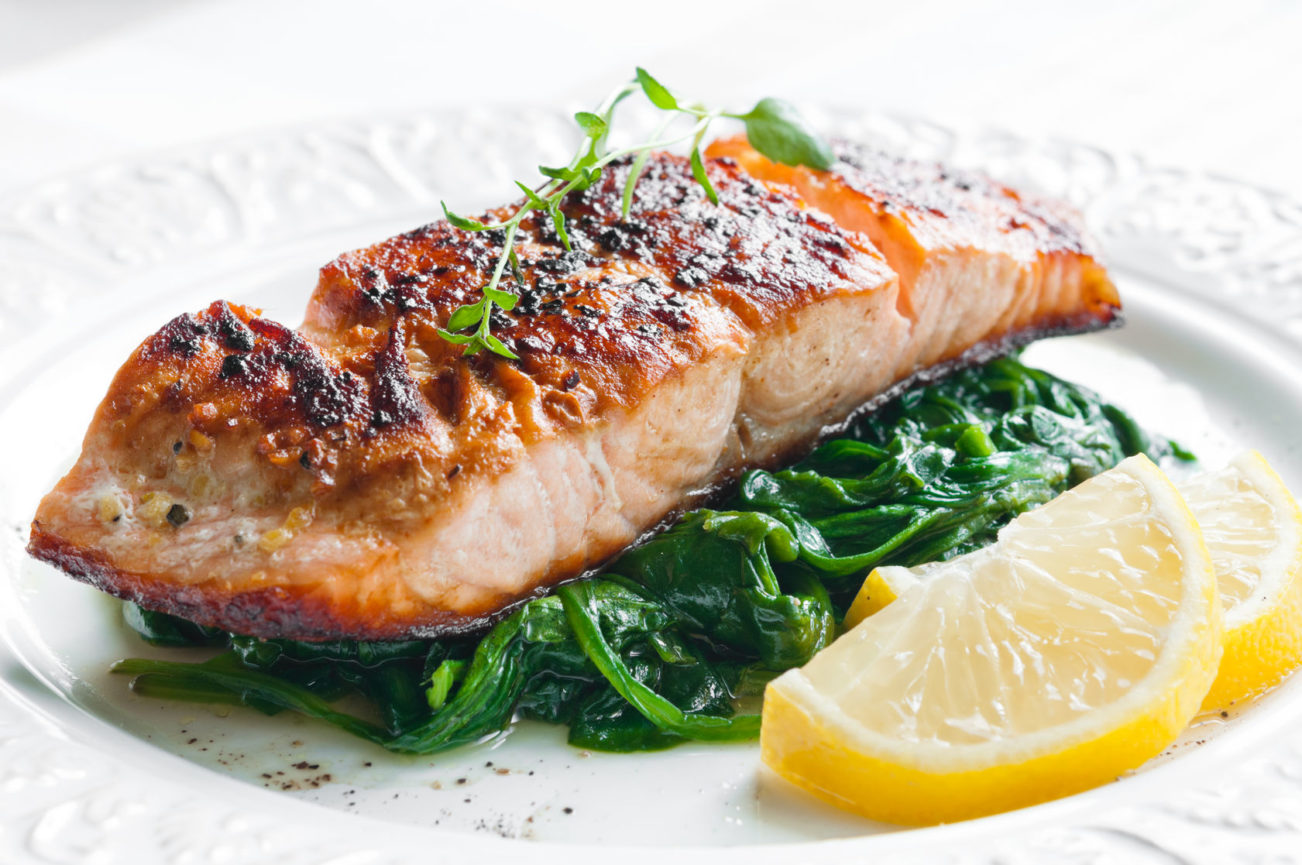
  • Jonny’s Mega Omega Salmon in a Snap

    Jonny’s Mega Omega Salmon in a Snap

    Wild salmon blends beautifully with sauteed spinach, and when both are lightly cooked in the best coconut oil on the planet, the resulting taste is superb. I love the organic spice pack that comes with the salmon I get from Vital Choice, but you can make your own spice mix or use salt and pepper– just don’t forget the turmeric. Turmeric is the superspice of all time, having both serious anti-inflammatory properties and some anticancer activity as well.

    Ingredients:

    1 ½ tablespoons (25ml) Barlean’s coconut oil
    4 Vita Choice Wild Alaskan Skinless Salmon fillets (6 ounces or 170 g each), thawed
    2 Vita Choice organic spice packs (included with salmon order, or use salt and pepper to taste)
    1 bag (6 ounces or 170 g) triple-washed baby spinach
    1 teaspoon on turmeric
    ¾ teaspoon lemon pepper
    2 tablespoons (28 ml) water
    2 teaspoons butter

    Instructions:

    Heat the coconut oil in a large Dutch oven over medium-high heat. Add the salmon fillets to the pan and sprinkle Vita Choice spice packs to taste over the surface or fillets. Sear for 1 minute or until lightly browned. Flip and sear the uncooked side for 1 minute, sprinkling the spice packs on the seared sides, to taste. Reduce the heat to medium low and add the spinach.

    Sprinkle the turmeric and lemon pepper over the spinach and add the water. Cover for 2 minutes. Remove the cover, add the butter, stir, and recover for about 1 to 3 minutes or until the salmon is cooked to your liking, Do Not Overcook!

  • You’re Probably Not Getting Enough of This Critical Nutrient…

    You’re Probably Not Getting Enough of This Critical Nutrient…

    I’m often asked by magazines to compile lists of the most important supplements to take on a regular basis. One supplement that always makes the cut—no matter what—is magnesium, and here’s why.

    First of all, magnesium deficiency can affect virtually every single organ system in the body. It’s involved in more than 300 enzyme reactions in the body, including fat, protein, and glucose metabolism, muscle and membrane transport, and energy production.

    In a classic article called The Importance of Magnesium to Human Nutrition, Michael Schachter, M.D, devotes a full four paragraphs to the possible symptoms and problems associated with getting too little magnesium—they range from salt and carbohydrate cravings to panic attacks, PMS, mitral valve prolapse, palpitations, cramps, muscle tensions, and insomnia.

    When I was a personal trainer and clients came to me with muscle cramps, the first order of business was always to make sure they were getting enough magnesium and potassium through supplements and food. That almost always takes care of the problem.

    Second of all, it’s a relaxer—magnesium actually helps open up the blood vessel walls, making it very important for keeping blood pressure in a healthy range. (In fact, magnesium is one of the key recommended supplements in the nutritional protocol at the highly regarded Hypertension Institute in Nashville. You can read about it in my friend Mark Houston, MD, MA’s excellent book, “What Your Doctor May Not Tell You About Hypertension.”)

    Third of all, it’s terrific for helping to lower or at least stabilize blood sugar, making it a top supplement in virtually all of the intelligent diabetes protocols I’ve ever seen. Magnesium also plays a critical role in the secretion and action of insulin. In the Nurses’ Health Study and the Health Professionals Follow-Up Study, the risk for developing type 2 diabetes was significantly greater in both men and women with a lower intake of magnesium.

    Speaking of which, almost no one is getting enough. Surveys consistently show that almost 3/4 of all Americans don’t even get even the paltry amount recommended in the Dietary Reference Intakes (DRIs) developed by the Food and Nutrition Board (FNB) at the Institute of Medicine of the National Academies (formerly National Academy of Sciences). (Those numbers range from 310 mg a day to 420 mg a day depending on sex, age and pregnancy, and most nutritionists I know, including me, consider them laughingly and inappropriately low.) According to a study in the Journal of the American College of Nutrition, 68% of American consumed less than the recommended daily allowance of this critical mineral. Even the National Institutes of Health states that “dietary intake may not be high enough to promote an optimal magnesium status, which may be protective against disorders such as cardiovascular disease and immune dysfunction”.

    So magnesium supplements always make my list of “most important to take on a daily basis”.

    Which brings me to Effervescent Magnesium Citrate by DaVinci Labs.

    While I take many of my supplements in pill form, I’m also a big fan of mixing them into shakes and drinks when an appropriate form can be found. I’ve tried mixing regular magnesium powder into shakes and, frankly, it usually doesn’t taste very good. What I love about effervescent magnesium citrate is it actually tastes like an orange drink. You can drink it by itself, mixed in water, or with a whole concoction of other powders, like I do. In fact, the orange, stevia-sweetened powder adds a nice fizzy texture and flavor to even icky tasting powders like the kind I drink regularly!

    Now, instead of holding my nose when I drink down my daily morning powdered supplement mix, I actually look forward to it.

    One small scoop provides 420 mg of magnesium citrate, and—just for good measure—a very nice 390 mg of potassium to boot.

    This is a great product that I use every single day. Highly recommended! Try it now »

  • Diabetes: Prevention and Cure

    Diabetes: Prevention and Cure

    It’s almost impossible to talk about diabetes these days without also mentioning its constant companion: obesity.

    In fact, the two have become so linked that health practitioners have come up with their own nickname for the pair, a kind of medical version of “Brangelina”-they call it Diabesity.

    According to Linda Geiss, a statistician with the Center for Disease Control, obesity is a major factor in the increase in diabetes. And what an increase it is- just in the six year period between 1997 and 2003 there was a 41% increase in the incidence of diagnosed diabetes. Unquestionably, obesity is part of the reason. In 2003, only 2 of 1000 normal-weight people had diabetes, but 18.3 of every 1000 obese people had it. Even being overweight increases risk- 5.5 out of every 1000 overweight people have the disease as well, almost three times as many as those of normal weight.(1)

    Should we be worried?

    Well, if current trends continue, 1 in 3 Americans will develop diabetes sometime in their lifetime.

    And in case you’re wondering, those with diabetes will lose on average 10-15 years of life.

    Diabetes is the leading cause of new cases of blindness among adults, not to mention kidney failure and non-traumatic lower-extremity amputations. And as of 2006, it was the 7th leading cause of death in the US-the risk of dying for a person with diabetes is about twice that of a person without the disease. (2)

    But here’s the thing: type ll diabetes, which is what we’re mainly talking about here, is virtually 100 percent preventable.

    It’s also treatable. And interestingly, the same things that benefit those with diabetes benefit those who are overweight and obese.

    To understand why dietary changes can have such a profound impact on diabetes, it helps to understand just what happens in the body when a person with a “normal” metabolism eats food:

    1. Food is broken down in the digestive system to smaller units that the body can do something with; carbs break down to glucose (sugar), protein breaks down to amino acids (some of which can be turned into sugar), and fat breaks down to fatty acids.
    2. The glucose (from the carbs and some of the amino acids) gets into the bloodstream, raising your blood sugar.
    3. In response, the pancreas secretes a hormone called insulin which- among its many jobs- helps escort that extra sugar out of the bloodstream and into the cells (especially the muscle cells) where it can be “burned” for energy.

    That’s when everything is going right.

    But there’s very little that’s “right” about the typical American diet.

    The Standard American Diet is Making Us Fat

    We eat far too much sugar, far too many carbs (which, as we’ve seen, turn into sugar) and far too many calories. Couple this with the fact that our sedentary lifestyle creates very little demand among the muscle cells for “fuel” (sugar).

    The result?

    Many of us have much more sugar floating around our bloodstream than we could possibly use. The pancreas tries desperately to keep up with the increased demand for insulin which is needed to bring blood sugar back down to normal.

    Sometimes it works, sometimes it doesn’t. The pancreas might manage to secrete enough insulin to keep blood sugar from being in the “diabetic” range, but the cost is a high level of insulin, which keeps fat from being “burned” (it also raises blood pressure). Your blood sugar may stay just under the cutoff for a diabetes diagnosis, but your high levels of insulin (and the inevitable inability of the cells to “listen” to insulin) classify you as “pre-diabetic”.

    In some cases even that extra insulin that the pancreas labored to produce can’t manage to get blood sugar down into the relatively “safe” (or non-diabetic) range. At this point, with elevated insulin and elevated blood sugar- you’ve got full blown type ll diabetes.

    Once you understand this, the importance of diet and exercise become very clear. Your diet needs to be one that doesn’t send your blood sugar through the roof. And exercise creates a natural demand from the muscle cells for sugar, therefore helping to reduce blood sugar naturally.

    Low-Carb Diets Work for Diabetes… and Weight Loss!

    In my opinion, the absolute best strategy for treating (and preventing!) diabetes is a controlled carbohydrate diet. Why? Because of the three “macronutrients” in every diet- protein, carbs and fats– the one that raises blood sugar the most is carbohydrates. Protein raises blood sugar and insulin a bit, but not nearly as much as carbs do. And fat raises it not at all.

    That’s why a low-fat high-carb diet is precisely the wrong way to go when you’re dealing with diabetes.

    Now this view is controversial (though becoming less so, particularly in view of mounting research showing the positive effect of low-carb diets on blood sugar and insulin). There have been successes with conventional low-fat diets, but they are nearly always loaded with fiber and vegetables (the so-called “low-glycemic” carbs), not with the processed carbs and sugar that are rampant in the conventional American diet. But reducing carbohydrate intake (especially from sugars and starches) virtually always normalizes insulin metabolism, and helps bring blood glucose (sugar) under control.

    What is Exactly Constitutes “Low-Carb” These Days?

    The following guidelines are adapted from the (sadly) out-of-print masterpiece, “Diabetes: Prevention and Cure” by C. Leigh Broadhurst, PhD. I’ve modernized them slightly, but the essence of her recommendations are hard to improve upon.

    • Limit carb consumption to fruits and vegetables.
    • Eat no pasta, bread, noodles, macaroni, rice, cereal or crackers.
    • Eat absolutely no sugar or sugary foods. “If it’s sugar-sweet or made of wheat, don’t eat”, she says.
    • Don’t drink fruit juices, except for a little in blender drinks. Eat the whole fruit.
    • Don’t eat meals or snacks composed mainly or wholly of carbs, especially at breakfast and late at night. Meals and snacks need to be a balance of protein, carbs and fat.
    • Eat copious quantities of fresh non-starchy vegetables (first choice) and fruits (second choice).
    • Don’t drink alcohol. “Alcohol, like refined sugars and starches, forces you to cannibalize your body’s nutrient stores just to metabolize it”.
    • Always consume your daily protein requirement. Donald Layman, PhD, one of the premiere researchers in the field of low-carb diets, routinely puts everyone on a diet of 125 grams a day of protein (along with 60 grams of fat and 100 grams or less of carbs, mostly from vegetables and fruits).
    • And, of course, start exercising. Every single day.

    Remember, a controlled carb diet doesn’t have to be extreme. Most Americans eat over 300 grams of the stuff on a daily basis. You should get huge benefits if you can cut that to 100, though some people may find that they need even greater restriction.

    My Recommended Reading List

    Some of the best information on diet and diabetes comes from Richard Bernstein, MD, a doc who himself has type l diabetes. His book “The Diabetes Diet” should be required reading.

    Also worth reading: “The Atkins Diabetes Revolution” by Mary Vernon, MD.

    Diabetes is one of those conditions where you actually can take control of your own health. Do it. As the kids would say, “it’s so worth it”.


    Sources

    1. WebMD, “Diabetes Up, Obesity to Blame”, April 20, 2006
    2. Centers for Disease Control and Prevention, Diabetes: At A Glance 2009

  • 150 Healthiest Foods: Green Beans

    150 Healthiest Foods: Green Beans

    The folate (folic acid) in green beans lowers the inflammatory compound called homocysteine which is usually high in people with heart disease and Alzheimer’s.

  • Featured Recipe: Savory Slow Cooker Tender Turkey Drumsticks

    Featured Recipe: Savory Slow Cooker Tender Turkey Drumsticks

    The following recipe is from “The Healthiest Slow-Cooker Recipes on Earth”, by myself and Jeannette Bessinger, available on Amazon.com – order here.

    Savory Slow Cooker Tender Turkey Drumsticks

    Turkey is a great, healthy source of protein (over 20 grams per serving) and turkey drumsticks are always a favorite. And you don’t have to wait till the holidays to enjoy them. This recipe is super easy, super fast, and when you use the slow cooker it cooks to a delicious tenderness in its own juices –no added fat calories. Yum. Seriously.

    Perfectly healthy fat replaces the conventional gravy or commercial cream of mushroom soup that generally smothers a dish like this. (Note: a can of commercial cream of mushroom soup has an astonishing 1995 mg of sodium. Need I say more?)

    Onions are a rich source of sulfur, so good for the skin, not to mention that they are one of the richest sources of a flavonoid called quercetin which is one of the most anti-inflammatory plant compounds on the planet. (Quercetin has also been shown to have significant anti-cancer properties.) Something to remember: Turkeys are frequently raised under horrific factory farmed conditions, so if possible, get the free-range variety. They’re almost always better for you anyway.

    Ingredients

    •  1 tablespoon olive oil
    • 3 turkey drumsticks
    • Sprinkles salt and cracked black pepper, to taste
    • 1 large Vidalia onion, chopped
    • 3 large carrots, peeled and sliced into thin coins
    • 2 large cloves garlic, minced
    • ½ teaspoon dried sage, crumbled
    • 2 tablespoons fresh parsley, chopped
    • 1 tablespoon fresh thyme, chopped (or use 1 teaspoon dried)
    • 1 lemon, halved

    Directions

    1. Oil the bottom of the slow cooker and the drumsticks with olive oil.
    2. Sprinkle liberally with salt and pepper, to taste.
    3. Place onions and carrots in the bottom of the cooker and top with prepared drumsticks.
    4. In a small bowl, mix garlic, sage, parsley and thyme together and sprinkle evenly over the drumsticks.
    5. Gently squeeze the lemon halves to release their juices into the vegetables and nestle them in at the bottom of the pot.
    6. Cook on low for 8-10 hours, or high for 4-5 hours or until meat is cooked through and meat and veggies are very tender.

    Yield: 4 servings


  • Three Great Ways to Make a Protein Shake

    Three Great Ways to Make a Protein Shake

    From time to time I hear from people who absolutely love the whey protein powders we sell on our website like Dream Protein, Whey Cool Protein and Paleomeal, but are stuck for ideas on how to use them.

    Sure, you can just add water, or some frozen berries, but after a while that can get kind of boring.  So I asked my cookbook writing partner, chef Jeannette Bessinger, to come up with a few original whey protein shake recipes that taste terrific. Here are three she specifically designed for the book of meal plans and recipes that are included in our sensational new program: Unleash Your Thin.

    As a bonus, one of them is dairy-free, while the other two are gluten-free:

    1. Oatmeal Smoothie

    Yield: 1 serving (Dairy-Free)

    Ingredients

    • 1 cup chilled unsweetened vanilla almond milk
    • 1/4 cup whole rolled oats (uncooked)
    • 1 tablespoon almond butter
    • 1 small ripe banana
    • 1 teaspoon cinnamon
    • 1 teaspoon grated fresh ginger, optional
    • 1 scoop protein powder
    • Few drops NuNaturals vanilla stevia, or Xylitol.

    Instructions

    Combine all ingredients in a powerful blender and blend until very smooth.


    2. Coconut Lemon Smoothie

    Yield: 1 serving (Gluten-Free)

    Ingredients

    • 8 ounces chilled coconut water
    • ½ lemon, peeled and seeded
    • 3 tablespoons dried coconut
    • 1/2 cup plain yogurt
    • 1 scoop protein powder
    • Few drops NuNaturals vanilla stevia, or Xylitol.

    Instructions

    Add all ingredients to blender and blend until very smooth.

    3. Spiced Peach Smoothie

    Yield: 1 serving (Gluten-Free + Dairy-Free)

    Ingredients

    • 1 cup unsweetened vanilla almond milk
    • 1 fresh, ripe peach, unpeeled, pitted and halved  (or 2/3 cup frozen peach slices)
    • 1 scoop protein powder
    • 1 heaping tablespoon soaked chia seeds
    • 1 tablespoon grated fresh ginger root
    • ¼ teaspoon cinnamon
    • ¼ teaspoon ground nutmeg
    • Few drops NuNaturals vanilla stevia, or Xylitol.

    Instructions

    Combine all ingredients in a powerful blender and blend until very smooth.

  • Featured Recipe: High-Fiber Curried Spinach and Lentils

    Featured Recipe: High-Fiber Curried Spinach and Lentils

    The following recipe is from the forthcoming book, “The 150 Healthiest Slow Cooker Recipes on Earth“, by myself and Chef Jeannette Bessinger.

    Featured Recipe: High-Fiber Curried Spinach and Lentils

    Those who read my book “The 150 Healthiest Foods on Earth” may remember my rhapsodic waxing about a superspice called turmeric.

    In case you missed it- or need a reminder- here’s a short list of the wonderful things it does.

    One, it’s among the most anti-inflammatory foods on the planet, (which matters because inflammation is a major part of every degenerative disease we know of).

    Two, it’s extremely good for the liver, that poor overworked organ that has to rid your body of all the toxins it’s exposed to on a daily basis.

    And three, it’s got significant anti-cancer activity.

    The thing of it is, turmeric goes beautifully with all sorts of dishes (besides, of course, the Indian food it’s best known for). This dish is a perfect example. Rich in fiber from the lentils, and with a ton of nutrients like iron, potassium, calcium and magnesium from the spinach, the dish goes together beautifully. A rich, fragrant vegetarian curry with a warming bite. You’ll love it.

    Ingredients

    • 2 ½ teaspoons cumin seeds
    • 1 ½ teaspoons coriander seeds
    • 1 tablespoon olive oil
    • 2 medium onions, sweet yellow, diced
    • 5 medium carrots, thinly sliced
    • 5 medium parsnips, thinly sliced
    • 5 garlic cloves, finely diced
    • 2 tablespoons ginger, finely diced
    • 2 ½ teaspoons turmeric
    • 1 cinnamon stick
    • ½ teaspoon cracked black or mixed peppercorns
    • 2 1/2 cups vegetable stock
    • Sprinkles salt, to taste
    • 3 medium sweet potatoes, peeled and thinly sliced
    • 1 ¼ cup brown lentils, rinsed thoroughly
    • 1 red chili, minced
    • 1 pound fresh spinach, stemmed and coarsely chopped
    • 1 cup reduced fat coconut milk
    • ¼ cup chopped fresh cilantro, optional

    Directions

    1. In a dry cast iron skillet over medium heat, toast the cumin and coriander seeds for a couple of minutes, stirring often, until they just begin to brown.
    2. Grind toasted seeds to a powder in a spice grinder or designated coffee grinder and set aside.
    3. In the same skillet, heat olive oil over medium heat and add onions, carrots and parsnips.
    4. Cook until tender, about 6 minutes.
    5. Add garlic, ginger root, turmeric, cinnamon stick, peppercorns and ground cumin and coriander seeds.
    6. Cook 1 minute, stirring constantly.
    7. Add vegetable stock and bring to a boil.
    8. Add salt to taste and transfer pan contents to slow cooker.
    9. Add sweet potatoes and lentils and stir well.
    10. Cover and cook on high for 3 hours, or low for 4-5 hours.
    11. Add chili pepper and stir well to incorporate.
    12. Add fresh spinach in handfuls, stirring each handful into the curry.
    13. Add coconut milk and stir until incorporated.
    14. Cook on high for 20 more minutes.
    15. Remove cinnamon stick and discard before serving.
    16. Garnish with cilantro, if using.

    Yield: 6-8 servings

    From Chef Jeannette

    The concept for this recipe comes from my friend, Mary Weaver, owner of the gourmet cooking school Newport Cooks in Newport, Rhode Island. She is an ethical vegetarian and always on the lookout for hearty meatless meals that taste great and provide a great balance of macronutrients.

    Serving Suggestion: This curry is delicious served over brown basmati rice or Thai-style rice noodles. To cool the heat a bit and add additional protein, spoon a dollop of plain, low fat Greek yogurt into each bowl.

  • Onions: A Real Superfood

    Onions: A Real Superfood

    Onions (excerpt from the best-selling book, “The 150 Healthiest Foods on Earth“)

    There’s no two ways about it: onions are a cancer-fighting food.

    In a number of impressive published studies, the consumption of onions (and other members of the allium vegetable family) demonstrated protective effects against stomach cancer. And in one study published in the journal of the National Cancer Institute, eating onions (as well as other members of its family like garlic, scallions, chives and leeks) significantly lowered the risk for prostate cancer.

    Onions (and its close relatives) have also been shown to have the same effect against esophageal cancer. In Vidalia, Georgia, where the Vidalia onion comes from and where onions are consumed in large quantities, the death rate from stomach cancer is 50% lower than the national mortality rate from stomach cancer. One theory is that onions contain diallyl sulfide which has the effect of increasing the body’s production of an important cancer fighting enzyme, glutathione-S-transferase.

    At least two important studies show that onions help build strong bones. In one, published in the prestigious journal Nature, male rats fed a small amount of dried onion daily had a 17% increase in calcium; female rats that had had their ovaries removed (which would rapidly induce bone loss and osteoporosis) had stronger bones when fed onions.

    And in another study, published in the Journal of Agriculture and Food Chemistry, a compound in onions inhibited the activity of the cells (osteoclasts) that break down bones. The popular drug Fosamax works in a similar way, but onions have no side effects unless you count the need to chew gum before making out.

    Onions belong to the allium family, which also includes leeks, garlic and shallots. They contain a whole pharmacy of compounds with health benefits, including thiosulfinates, sulfides, sulfoxides and other smelly sulfur compounds.

    But those same smelly compounds offer a lot of nutrition bang for the relatively small price of a little eye-watering. In a study in the European Journal of Clinical Nutrition, onions are one of a very select group of foods the combination of which was found to reduce mortality from coronary heart disease by an impressive 20% (the others included broccoli, tea and apples).

    Onions contain powerful antioxidants and are anti-inflammatory, antibiotic and antiviral. They are a great source of quercetin, one of my favorite anti-inflammatory compounds, and one which itself is associated with beneficial effects on chronic diseases like cancer and heart disease.

    The class of chemicals that quercetin belongs to- flavanoids– have anti-allergic properties as well, and quercetin in particular is frequently used by nutritionists as part of their arsenal for treating allergies with natural substances. Quercetin can help relieve asthma and hay fever by blocking some of the inflammatory responses in the airways.

    Our bodies absorb quercetin from onions very easily, though you’ll probably need quercitin supplements if your main interest is using it therapeutically as an anti-inflammatory. Onions also contain a number of sulfides very similar to those in garlic, which may lower blood lipids and blood pressure.

    The type of onion affects the content of the health promoting chemicals, and the stronger tasting ones probably have superior properties.