Tag: cancer

  • Grilling Your Way to Cancer? You don’t have to.

    Grilling Your Way to Cancer? You don’t have to.

    [vc_row][vc_column][vc_column_text]

    Everyone says grilling meat causes cancer. Read what to do about it.

    By Jonny Bowden

    Barbeque season has arrived, which brings me to my annual message on healthy grilling.

    There is a smart way to grill, and a dumb way to grill. The first helps protect your health, the other does exactly the opposite.

    I recently had the opportunity to discuss healthy grilling when I appeared on Sacramento’s KCRA News and KXTVNews. During both interviews, I suggested that the single most important thing viewers could to protect themselves against cancerous compounds formed while grilling was to make a marinade:  of herbs, spices and Malaysian palm oil.

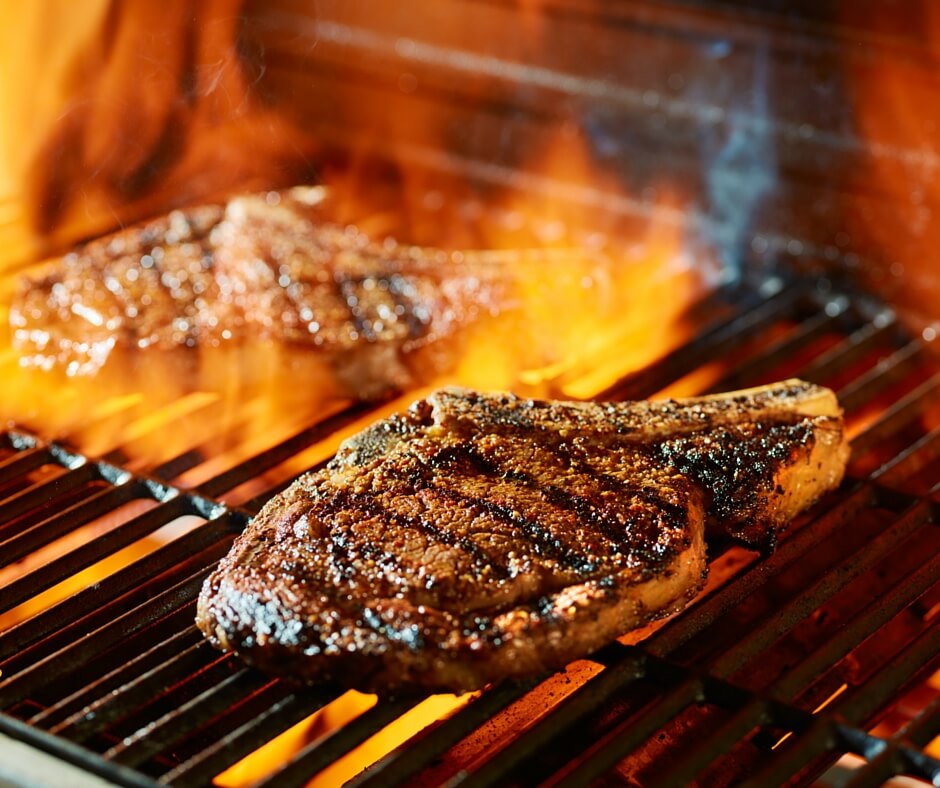
    The first commandment of grilling: Don’t leave food on the grill until it blackens. Those big flames licking your hamburgers may make the burger look mouth-watering, but what those flames are doing to the burger from a health standpoint is a disaster.

    See, the single biggest danger with grilling is high heat. Those big, attention-getting flames interact with the meat to form compounds called heterocyclic amines, which are carcinogenic.

    There are safer ways to prepare your meal.

    Making a marinade from oils and spices is a great grilling strategy. There’s solid research showing the protective effects of a good marinade as it really cuts down on all the compounds that you don’t want from your barbecue.

    As with everything, details matter, and in this case the details are in the choice of oil and choice of herbs and spices. Some oils work better than others for the marinade. Our diet is way too high in pro-inflammatory omega-6s, which are exactly what we’re consuming when we use vegetable oil. You are much better off switching to some better oils, like Malaysian palm oil. This red oil is filled with carotenoids and tocotrienols and I also like using it because of its sustainability. Malaysia protects 50 percent of their forests, which means there, no orangutan habitats are harmed in the making of palm oil.

    Adding herbs and spices with antioxidants and anti-inflammatory qualities to a better quality cooking oil can spruce up the marinade too. If you look on any nutrition data site, you’ll see that pound for pound, herbs and spices are more nutritionally rich than practically any other class of food. You can’t go wrong with any of them, but I particularly like using turmeric, oregano… or both.

    As Dr. Masley and I wrote in our recent book, Smart Fat, spices are like a medicine cabinet, stocked with terrific, health-giving, natural remedies that we don’t use nearly as much as we should. Use them! Cover whatever you’re grilling with Malaysian palm oil and then just go to town with any or all of the herbs and spices you’ve got on hand. Keep the heat a little bit lower than normal—eat meat, fish and chicken just a tiny bit rarer, and you’ll be doing yourself—and everyone at your BBQ—a tremendous service!

    [/vc_column_text][/vc_column][/vc_row][vc_row][vc_column][vc_column_text]

  • Does Broccoli Really Fight Cancer?

    Does Broccoli Really Fight Cancer?

    Cruciferous vegetables like broccoli have long been known to contain plant chemicals like indoles that have anti-cancer action. Now a new study confirms that another plant compound found in broccoli—sulforaphane—also has cancer-fighting properties.

    The latest study, done by Emily Ho and a team of researchers from the Linus Pauling Institute at Oregon State University, found that sulforaphane—a powerful antioxidant found in abundance in broccoli and other cruciferous vegetables—has the power to selectively target and kill cancer cells, meanwhile leaving normal prostate cells unaffected.

    Sulforaphane- which is also a potent antioxidant—apparently inhibits HDAC enzymes (histone deacetylase) which play an important role in whether or not certain genes—like tumor suppressor genes—are “expressed” (activated) or not. HDAC inhibition is a very promising are of cancer treatment and researchers are working on both pharmaceutical and dietary approaches to inhibiting this group of enzymes.

    Cancer is characterized by inappropriate cell growth, but HDAC inhibitors can help restore cells to their normal function. Previous studies at Oregon State have demonstrated that the growth of prostate tumors in mice were significantly slowed by diets containing sulforaphane. Lead researcher Emily Ho—an associate professor in the Department of Nutrition and Exercise Science at OSU– told Science Daily, “(Sulforaphane) does appear to be a phytochemical that can selectively kill cancer cells, and that’s always what you look for in cancer therapies”.

    And sulforaphane’s cancer-fighting ability doesn’t come solely from its ability to inhibit the HDAC enzymes. As I wrote in “The 150 Healthiest Foods on Earth”, sulforaphane increases the activation of enzymes in the liver which help fight carcinogens. These enzymes-  known as phase-2 enzymes—are essential for detoxification and are believed to reduce the risk of prostate cancer. According to research from the Department of Urology at Stanford University published in Cancer Epidemiology Biomarkers and Prevention, sulforaphane is the most potent inducer of phase-2 enzymes of any phytochemical known to date!

    Other studies have demonstrated the cancer-fighting power of cruciferous vegetables. In 2007, Victoria Kirsh, PhD., of Cancer Care Ontario in Toronto and her team found that eating fruits and vegetables in general was not associated with decreased prostate cancer risk, but greater consumption of dark green and cruciferous vegetables were. “A possible means to reduce the burden of this disease may be primary prevention through increased consumption of broccoli, cauliflower and possibly spinach”, wrote the authors.

    The best news of all is that you don’t have to eat that much broccoli (or broccoli sprouts, which has over 50 times the amount of sulforaphane found in regular mature broccoli) to get  cancer-risk-reducing benefit. An earlier study—also by Emily Ho—found that eating some broccoli sprouts on top of a bagel with cream cheese (not recommended!) resulted in HDAC inhibition.

    “The compound in broccoli may be one of the strongest anti-cancer fighters we have”, said Ho.

    It’s important to remember that the way you cook your broccoli has a lot to do with getting the most cancer-fighting ability out of the vegetable. Broccoli contains an important enzyme of its own, called myrosinase, which has to be present to form sulforaphane. Myrosinase can be destroyed by overcooking their broccoli, so make sure not to do that! Steaming it for 2-4 minutes is absolutely ideal.

    You can also up the sulforaphane content of broccoli—or even of broccoli powder or green drink powders that contain it—by simply adding some broccoli sprouts. One study found a strong synergistic effect between broccoli powder and sprouts. The lead author of that study, Elizabeth Jeffrey of the University of Illinois, told Science Daily, “There was almost a twofold increase in sulforaphane absorption when sprouts and powder were eaten together”.

    So there you have it. An ordinary inexpensive food with solid research backing its cancer-fighting ability. That’s a whole lot more promising than most of the expensive over-hyped “anti-cancer” products on the market!

  • Diet to Prevent Cancer, Alzheimer’s

    Diet to Prevent Cancer, Alzheimer’s

    United Press International

    03-08-11

    An epigenetic eating regimen uses specific food compounds to prevent cancer or Alzheimer’s disease, University of Alabama at Birmingham researchers said.

    Epigenetics is the science of how environmental influences (including nutrition) affect and change our genes.

    Study co-author Trygve Tollefsbol said epigenetics research worldwide, including numerous studies conducted at the University of Alabama, have identified specific food compounds found in food such as broccoli and cabbage inhibit negative epigenetic effects that can help reverse or help prevent cancers and other aging-related diseases.

    “Your mother always told you to eat your vegetables, and she was right,” Tollefsbol said in a statement. “But now we better understand why she was right — compounds in many of these foods suppress gene aberrations that over time cause fatal diseases.”

    The epigenetics diet includes such foods as soybeans, cauliflower, broccoli, cabbage, green tea, fava beans, kale, grapes and the spice turmeric, Tollefsbol said.

    “The epigenetics diet can be adopted easily, because the concentrations of the compounds needed for a positive effect are readily achievable,” lead author Syed Meeran said.

    Meeran said sipping tea compounds called polyphenols in daily amounts that are equivalent to approximately three cups of green tea has been shown to reverse breast cancer in laboratory mice by suppressing the gene that triggers the disease. A daily cup of broccoli sprouts, which has sulforaphane as an active compound, has been shown to reduce the risk of developing many cancers, Tollefsbol said.

    The review is published in the journal Clinical Epigenetics.

    Dr. Jonny Comments:

    Epigenetics is the study of how genes are affected by things in the environment. As readers of this newsletter know, genes are not destiny, contrary to popular belief. Genes are more like light switches- they have to be turned on or turned off in order to “express” themselves (i.e. light the room). Our choices have a great deal to do with whether or not certain genes get “turned on” or “turned off”.

    For example, let’s say that scientists discovered a gene that increases your risk for lung cancer when you smoke. And for the sake of this discussion, let’s say that a smoker who has this gene has a 50% higher risk of getting lung cancer than a smoker who doesn’t have the gene. But if you have that gene- and you never smoke— it just doesn’t matter.

    Nutrition has a huge influence on our genes. The science of studying how nutrients can specifically interact with genes to turn them “on” or “off” is called nutrigenomics. Nutrients can “turn on” the light switches (or leave them untouched, much like not smoking leaves the “cancer” gene untouched in the above example).

    The research discussed above simply shows the power of certain nutrients (like the indoles in broccoli and cabbage, for example) to profoundly affect both genes and disease.

    Remember, genes loads the gun; but environment pulls the trigger.

    With a very very few exceptions, genes are not destiny. The course of your life is in your own hands, and in 99% of all cases, the choices you make trump the genes you were given.