Tag: insulin

  • What is Cardiometabolic Health, Anyway?


    One of the hazards of seeing health information online is that we frequently encounter buzzwords of questionable use. Some of these terms are frankly dumb, ultimately useless, and will be deservedly forgotten by the next news cycle.

    But some of them—like cardiometabolic— are actually worth paying attention to.

    The term cardiometabolic is usually used as a descriptor, as in “cardiometabolic health” or “cardiometabolic disease”. In fact, cardiometabolic health has now become a lot more than a buzz term. It’s an important (and attainable) goal for many people seeking optimal health and longevity.

    Let me explain.

    “Cardiometabolic” refers to a cluster of conditions (like high blood pressure) that aren’t by themselves diseases but are the underlying conditions which frequently lead to serious illness. None of these conditions are “good” things to have, but when several of them are clustered together in the same person, it becomes, as they say, a “thing”, and that person is now said to have Cardiometabolic Syndrome (CMS).

    Cardiometabolic Syndrome is a “thing”

    CMS used to be called Metabolic Syndrome and is also known as pre-diabetes. (They’re exactly the same thing.) The cluster of conditions was first named “Syndrome X” back in the 80’s by Gerald Reaven, MD,  the Stanford researcher who first discovered their importance. “Syndrome X”, eventually morphed into Metabolic Syndrome, and is now known as Cardiometabolic Syndrome. Both the Endocrine Society and the World Health Organization now officially recognize CMS as a disease entity, and according to all the latest research, it is a global health threat of staggering proportions.

    So what are the five conditions that define cardiometabolic syndrome?

    1. High blood pressure
    2. Abdominal obesity (waist higher than 35 for women, 40 for men)
    3. High fasting blood sugar
    4. Low HDL cholesterol
    5. Insulin resistance*

    *(Insulin resistance is so central to this discussion that I’ll give it its own newsletter soon. I think it’s the metabolic plague of the 21st century and one of the most important and overlooked risk factors for all kinds of conditions you definitely don’t want to have.)

    And while it isn’t part of the official list of the five bad guys, a strong argument could be made for including a sixth villain: High triglycerides. (I’ll talk about that in a future blog. I’m convinced it’s just as important as the other five.)

    If you have any (or several, or all) of these conditions, you need to pay attention. And if you don’t know if you have one or more of these, you need to find out. (I’ll be talking more about how to do that in future blogs).

    For now, get out your most recent blood test take a look at the following numbers, and see if they are “in range”:

    1. Fasting blood sugar (glucose)
    2. Triglycerides
    3. HDL cholesterol
    4. Fasting insulin (if you were lucky enough to have found a doctor wise enough to order that test for you).

    Then measure your waistline. If it’s over 35” (for a woman) or over 40” (for a man) you meet the technical criteria for the fifth condition that defines CMS– abdominal obesity.

    In future blogs, we’ll be talking about what each of these metrics tells us, how to make sense of that information, and—most important—what you can do to improve any of the numbers you’re not happy with.

    The good news is that—with the possible exception of HDL—all of them can be significantly improved with lifestyle redirection.

    Spoiler alert: The big guns in your arsenal are food, supplements, sleep, sun, and stress-reduction!

    More to come!

    Stay healthy,

    jb
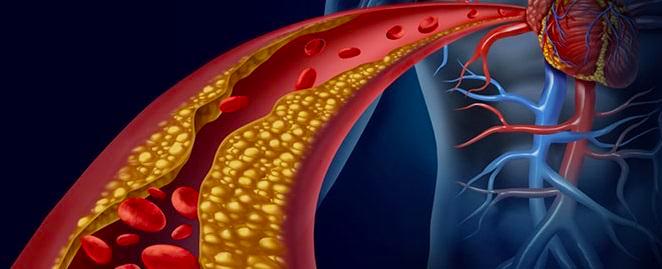
     

  • Has the Cholesterol Test Outlived its Usefulness?

    Has the Cholesterol Test Outlived its Usefulness?

    Ten years ago, cardiologist Steven Sinatra, M.D., and I came together to write a book called The Great Cholesterol Myth, which, as you can imagine, was a pretty controversial name for a book. It landed us on the Dr. Oz show where I said, “Trying to reduce the risk of heart disease by lowering your LDL cholesterol is like trying to reduce the calories on your whopper by taking off the lettuce.”

    That statement is even truer today than it was a decade ago.

    A lot has changed in the way conventional medicine views cholesterol and heart disease since 2010. We now have technology that allows us to clearly identify at least 13 different subtypes of cholesterol, many of which behave in unique ways in the body. Being able to measure cholesterol with much greater specificity than ever before is good news indeed, because it gives us much more information and far greater accuracy when it comes to predicting future cardiovascular events.

    The sad news is doctors are mostly still measuring cholesterol the old-fashioned way. That’s equivalent to doing long division with a pad and pencil when you’ve got a smartphone available—it’s slow, cumbersome, and frequently inaccurate. We discuss this at length in the new, revised, and updated version of The Great Cholesterol Myth, which comes out in October 2020 and is available now for preorder.

    In the new book, we talk about the sophisticated lab tests that now exist to tease out risk factors that have been hiding in plain sight for decades—factors we now understand are directly and profoundly connected to heart disease.

    There are now at least a dozen cardiac markers that we can test that influence the likelihood of you getting heart disease. And best of all, many of these risk factors can be strongly modified by our own life choices. Spoiler alert: One of the most important of these risk factors is insulin resistance, which most doctors don’t even know to check for, and can almost completely be reversed by diet. (I’ll be discussing insulin resistance and its role in heart disease in my next few columns.)

    And it’s not just insulin resistance that points the way to oncoming heart disease, which it does far more effectively and accurately than LDL (“bad”) cholesterol ever did. Every year we meet more and more physicians at conferences who are realizing the importance of inflammation and oxidation in making arteries vulnerable to plaque. Every year we meet more and more physicians who have come around to the notion that nutrition and diet—the redheaded stepsister of traditional medical education—can be powerful allies in the fight against heart disease (and not, as previously believed, by adhering to a low-fat diet!). And every year we meet more physicians who have come to question the usefulness of statins (the major class of drugs used to lower cholesterol). Statins lower cholesterol just fine! The question is whether they prevent deaths.

    And the answer, sadly, is no.

    The connection between diabetes and heart disease—sugar, anyone?—is the central thesis of the new edition of the book. Insulin resistance is something that nearly always precedes (or accompanies) type 2 diabetes. And—as we argue in the book—diabetes is almost always an early warning sign for heart disease.

    Understanding insulin resistance—and how to prevent, treat, and even reverse it—is one of the most important things you can do if you want to prevent heart disease. In the new book, we argue that if you catch insulin resistance early enough, you can prevent heart disease—for many, if not most, people. One study we talk about in the book showed treating insulin resistance properly could prevent as many as 42% of all heart attacks.

    Now for the bad news: Most doctors don’t know this. Even worse, most are still prescribing powerful drugs for a condition known as “high cholesterol” which is really not a medical condition at all, but a number on a lab test—a lab test that, in 2020, has long been past its expiration date.

    It’s time to stop concentrating on lowering LDL cholesterol and start paying attention to how we can lower the risk of heart disease.

    They are not the same thing.