
Both are measurements of a foods effect on your blood sugar. Here’s the fine print, glycemic index is based on a fifty gram portion of carbohydrate. By the way, that’s what we call net carbohydrates, or total carbs minus fiber, because fiber doesn’t have any impact on blood sugar. So, if it was twenty grams of carbs and ten of them were fiber, you’re looking at ten grams of carbohydrates. What’s left there, that carbohydrate content, is what actually impacts your blood sugar.
The glycemic index looks at what happens to your blood sugar when you eat a fifty gram portion of net carbs of any given food. The problem is it’s a very arbitrary amount. To get fifty grams of net carbs with a carrot, you’d have to eat a bushel. While fifty grams of net carbs might be a very high amount for carrots, it’s a tiny amount when you’re eating pasta at the Olive Garden, which is much more likely to have two hundred grams of net carbs per oversized portion. That’s where the glycemic load comes in; it takes into account how much of the carb food you’re actually going to be eating. That’s a critical difference. Here’s an example, let’s say East African Saffron is three hundred dollars a pound. Wow, that’s a lot of money, right? Except that your recipe only calls for a half teaspoon, which is going to cost you eighty cents. Glycemic index is like the three hundred dollar per pound price, but glycemic load is what you’re going to pay at the checkout line.
Now, go back to carrots. If you look at the real life portion of carrots, the actual glycemic load is tiny. Glycemic load is what we should be looking at, because it reflects real life portions. Knowing that, let’s look at some of the forbidden foods and see what they really do to blood sugar. Get ready to be surprised. For reference, glycemic load of zero to ten is considered low, ten to twenty is considered medium and anything over twenty is considered high. Let’s start with squash: four ounces, a nice size portion, is only a four. One cup of chopped summer squash has a glycemic load of two. How about bananas? A lot depends on their size and their ripeness. The larger bananas get up there in the eleven to twelve range, that’s still the low end of the medium range. Here’s one that’s going to kill you, watermelon. If you had a whole cup of watermelon balls that’s a glycemic load of three. Now, if you ate the whole fifteen inch melon, the glycemic load is off the charts, it’s ninety three. The moral of the story is, don’t eat the whole melon!
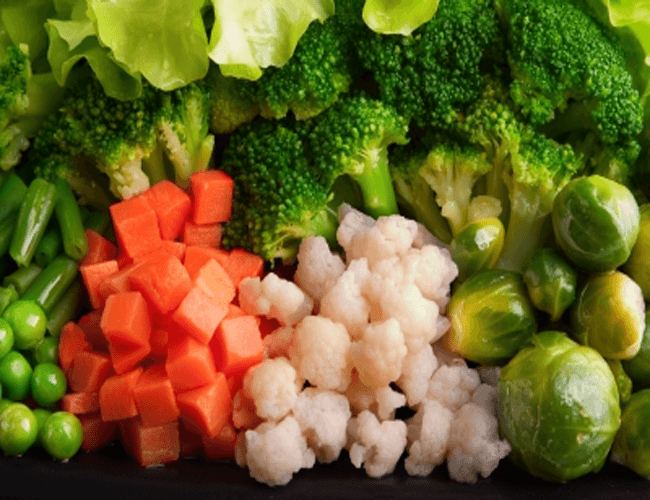
Peas are a really interesting case. We’re always told to, “Lay off the peas, lay off the carrots.” A whole cup of peas has a glycemic load of nine. It’s approaching middle territory, but it’s safely within the low zone and has nine grams of fiber. Compare that to bread. Like the great nutritionist, C. Leigh Broadhurst, once told me, “No one ever became diabetic by eating peas and carrots.” The point is not to stuff yourself with sweet foods. Some foods that have a really crummy reputation among the low carb crew, really don’t deserve that reputation. You can eat some of them, if you watch the portions, without knocking your blood sugar out of whack.