Tag: cholesterol

  • What is Cardiometabolic Health, Anyway?


    One of the hazards of seeing health information online is that we frequently encounter buzzwords of questionable use. Some of these terms are frankly dumb, ultimately useless, and will be deservedly forgotten by the next news cycle.

    But some of them—like cardiometabolic— are actually worth paying attention to.

    The term cardiometabolic is usually used as a descriptor, as in “cardiometabolic health” or “cardiometabolic disease”. In fact, cardiometabolic health has now become a lot more than a buzz term. It’s an important (and attainable) goal for many people seeking optimal health and longevity.

    Let me explain.

    “Cardiometabolic” refers to a cluster of conditions (like high blood pressure) that aren’t by themselves diseases but are the underlying conditions which frequently lead to serious illness. None of these conditions are “good” things to have, but when several of them are clustered together in the same person, it becomes, as they say, a “thing”, and that person is now said to have Cardiometabolic Syndrome (CMS).

    Cardiometabolic Syndrome is a “thing”

    CMS used to be called Metabolic Syndrome and is also known as pre-diabetes. (They’re exactly the same thing.) The cluster of conditions was first named “Syndrome X” back in the 80’s by Gerald Reaven, MD,  the Stanford researcher who first discovered their importance. “Syndrome X”, eventually morphed into Metabolic Syndrome, and is now known as Cardiometabolic Syndrome. Both the Endocrine Society and the World Health Organization now officially recognize CMS as a disease entity, and according to all the latest research, it is a global health threat of staggering proportions.

    So what are the five conditions that define cardiometabolic syndrome?

    1. High blood pressure
    2. Abdominal obesity (waist higher than 35 for women, 40 for men)
    3. High fasting blood sugar
    4. Low HDL cholesterol
    5. Insulin resistance*

    *(Insulin resistance is so central to this discussion that I’ll give it its own newsletter soon. I think it’s the metabolic plague of the 21st century and one of the most important and overlooked risk factors for all kinds of conditions you definitely don’t want to have.)

    And while it isn’t part of the official list of the five bad guys, a strong argument could be made for including a sixth villain: High triglycerides. (I’ll talk about that in a future blog. I’m convinced it’s just as important as the other five.)

    If you have any (or several, or all) of these conditions, you need to pay attention. And if you don’t know if you have one or more of these, you need to find out. (I’ll be talking more about how to do that in future blogs).

    For now, get out your most recent blood test take a look at the following numbers, and see if they are “in range”:

    1. Fasting blood sugar (glucose)
    2. Triglycerides
    3. HDL cholesterol
    4. Fasting insulin (if you were lucky enough to have found a doctor wise enough to order that test for you).

    Then measure your waistline. If it’s over 35” (for a woman) or over 40” (for a man) you meet the technical criteria for the fifth condition that defines CMS– abdominal obesity.

    In future blogs, we’ll be talking about what each of these metrics tells us, how to make sense of that information, and—most important—what you can do to improve any of the numbers you’re not happy with.

    The good news is that—with the possible exception of HDL—all of them can be significantly improved with lifestyle redirection.

    Spoiler alert: The big guns in your arsenal are food, supplements, sleep, sun, and stress-reduction!

    More to come!

    Stay healthy,

    jb


  • Has the Cholesterol Test Outlived its Usefulness?

    Has the Cholesterol Test Outlived its Usefulness?

    Ten years ago, cardiologist Steven Sinatra, M.D., and I came together to write a book called The Great Cholesterol Myth, which, as you can imagine, was a pretty controversial name for a book. It landed us on the Dr. Oz show where I said, “Trying to reduce the risk of heart disease by lowering your LDL cholesterol is like trying to reduce the calories on your whopper by taking off the lettuce.”

    That statement is even truer today than it was a decade ago.

    A lot has changed in the way conventional medicine views cholesterol and heart disease since 2010. We now have technology that allows us to clearly identify at least 13 different subtypes of cholesterol, many of which behave in unique ways in the body. Being able to measure cholesterol with much greater specificity than ever before is good news indeed, because it gives us much more information and far greater accuracy when it comes to predicting future cardiovascular events.

    The sad news is doctors are mostly still measuring cholesterol the old-fashioned way. That’s equivalent to doing long division with a pad and pencil when you’ve got a smartphone available—it’s slow, cumbersome, and frequently inaccurate. We discuss this at length in the new, revised, and updated version of The Great Cholesterol Myth, which comes out in October 2020 and is available now for preorder.

    In the new book, we talk about the sophisticated lab tests that now exist to tease out risk factors that have been hiding in plain sight for decades—factors we now understand are directly and profoundly connected to heart disease.

    There are now at least a dozen cardiac markers that we can test that influence the likelihood of you getting heart disease. And best of all, many of these risk factors can be strongly modified by our own life choices. Spoiler alert: One of the most important of these risk factors is insulin resistance, which most doctors don’t even know to check for, and can almost completely be reversed by diet. (I’ll be discussing insulin resistance and its role in heart disease in my next few columns.)

    And it’s not just insulin resistance that points the way to oncoming heart disease, which it does far more effectively and accurately than LDL (“bad”) cholesterol ever did. Every year we meet more and more physicians at conferences who are realizing the importance of inflammation and oxidation in making arteries vulnerable to plaque. Every year we meet more and more physicians who have come around to the notion that nutrition and diet—the redheaded stepsister of traditional medical education—can be powerful allies in the fight against heart disease (and not, as previously believed, by adhering to a low-fat diet!). And every year we meet more physicians who have come to question the usefulness of statins (the major class of drugs used to lower cholesterol). Statins lower cholesterol just fine! The question is whether they prevent deaths.

    And the answer, sadly, is no.

    The connection between diabetes and heart disease—sugar, anyone?—is the central thesis of the new edition of the book. Insulin resistance is something that nearly always precedes (or accompanies) type 2 diabetes. And—as we argue in the book—diabetes is almost always an early warning sign for heart disease.

    Understanding insulin resistance—and how to prevent, treat, and even reverse it—is one of the most important things you can do if you want to prevent heart disease. In the new book, we argue that if you catch insulin resistance early enough, you can prevent heart disease—for many, if not most, people. One study we talk about in the book showed treating insulin resistance properly could prevent as many as 42% of all heart attacks.

    Now for the bad news: Most doctors don’t know this. Even worse, most are still prescribing powerful drugs for a condition known as “high cholesterol” which is really not a medical condition at all, but a number on a lab test—a lab test that, in 2020, has long been past its expiration date.

    It’s time to stop concentrating on lowering LDL cholesterol and start paying attention to how we can lower the risk of heart disease.

    They are not the same thing.

  • Why Lowering Cholesterol Won’t Prevent Heart Disease

    Why Lowering Cholesterol Won’t Prevent Heart Disease

    Trying to prevent heart disease by lowering cholesterol is like trying to prevent obesity by cutting the lettuce out of your Big Mac.

    Surprised? Read on.

    Recently, cardiologist Stephen Sinatra and I came together to write a book—“The Great Cholesterol Myth: Why Lowering Cholesterol Won’t Prevent Heart Disease and the Statin-Free Plan That Will” (now the number 1 best-seller on Amazon in the category of heart disease).

    We believe that a weird admixture of…

    • misinformation
    • scientifically questionable studies
    • corporate greed
    • and deceptive marketing

    …has conspired to create one of the most indestructible and damaging myths in medical history:

    that cholesterol causes heart disease.

    The real tragedy is that by putting all our attention on cholesterol, we’ve virtually ignored the real causes of heart disease:

    • inflammation
    • oxidative damage
    • stress
    • sugar

    These are things we can actually do something about using food, supplements and lifestyle changes, none of which have the costs—nor the considerable side effects—of drugs.

    First, let’s start with some surprising facts.

    • Cholesterol is a minor player in heart disease
    • Cholesterol levels are a poor predictor of heart attacks
    • Half of heart attacks happen to people with normal cholesterol
    • Half the people with elevated cholesterol have healthy hearts
    • Lowering cholesterol has an extremely limited benefit

    I haven’t come to these conclusions lightly, and I wouldn’t expect you to take them at face value. The case against cholesterol as a cause of heart disease (or even as an important marker for it) has been crumbling steadily for decades, but getting the information out there is difficult. (The two top cholesterol lowering medications, Lipitor and Zocor, together bring in roughly 34 billion dollars a year for their makers, who have a strong vested interest in keeping the cholesterol theory alive. And they’re hardly the only ones who do.)

    But if you’re willing to consider breaking with conventional thinking for a minute, consider the following study, just one of the many we discuss in the book.

    The Lyon Diet-Heart Study

    In the 1990’s, French researchers decided to run an experiment- known as the Lyon Diet-Heart Study— to test the effect of different diets on heart disease.

    They took two groups of men who had every risk factor for heart disease imaginable. All of them had survived a heart attack. They had high cholesterol, they smoked, they didn’t exercise and they had high levels of stress.

    • Half the men were advised to eat the American Heart Association “prudent diet”  (low saturated fat and cholesterol)
    • The other half were advised to eat a Mediterranean diet high in fish, omega-3’s, vegetables and monounsaturated fat like olive oil

    The study was stopped midway because the reduction in heart attacks in the Mediterranean group was so pronounced—70%!!—that researchers decided it was unethical to continue.

    So what do you think happened to the cholesterol levels in the men who ate the Mediterranean diet and had 70% reduction in deaths? You’d think they must have dropped like a rock, right?

    Think again. Their cholesterol levels didn’t budge, and were just as high when the study was stopped as they were when the study began. The men just stopped dying. Cholesterol had nothing to do with it.

    So if cholesterol isn’t the cause of heart disease, what is?

    The Real Cause of Heart Disease

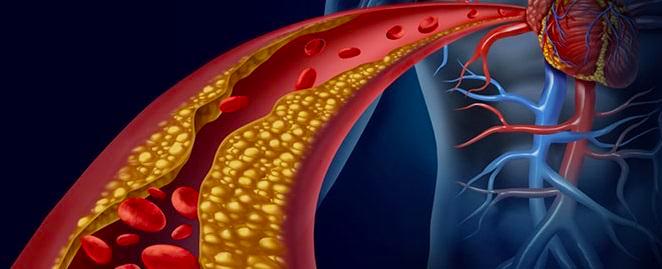
    Here’s the short answer: The primary cause of heart disease is inflammation. Small injuries to the vascular wall that can be caused by anything from high blood pressure to toxins attract all sorts of metabolic riff-raff, from bacteria to oxidized (damaged) LDL particles; the immune system sends inflammatory cytokines to the area, and more oxidation and inflammation takes place eventually resulting in the growth of plaque and, ultimately, to an increased risk for heart disease. If there were no inflammation, the arteries would be clear.

    The following is my seven point program for reducing the risk of heart disease. Note that lowering cholesterol isn’t on it. Note also that managing stress is.

    Stress is a powerful contributor to heart disease. The stress hormones create inflammatory events that may explain why 40% of atherosclerotic patients have no other risk factors.

    Pay attention to these seven action items, and you just may find that you don’t need to worry quite so much about cholesterol after all.

    1. Eat an anti-inflammatory diet. The fruit and vegetable kingdom is teeming with natural anti-inflammatories like quercetin (apples and onions) and curcumin (turmeric). Drink green tea and pomegranate juice. Balance your protein and fat with tons of vegetables. And eat dark chocolate—it’s cocoa flavanols help lower blood pressure and keep the cardiovascular system healthy.
    2. Reduce grains, starches, sugar and omega-6’s (vegetable oils).  Every one of these has the power to increase inflammation—a lot!
    3. Manage Your Stress. Stress is an enormous risk factor for heart disease, and is inflammatory as well. Find a way to manage it. Anything from regular walks in the park to deep breathing exercises to warm baths can help.
    4. Exercise. It’s probably the best anti-aging (and heart protective) drug on the planet
    5. Drink only in moderation. And if you don’t process the word “moderation” very well, don’t drink at all.
    6. Don’t smoke. Probably the number one recommendation for heart disease prevention.
    7. Supplement with antioxidants, vitamin C, Coenzyme Q10, omega-3’s, curcumin, citrus bergamont. Antioxidants like vitamin C protect against oxidative damage (one of the promoters of heart disease) while omega-3’s are one of the most anti-inflammatory molecule on earth. Curcumin does just about everything—it’s an anti-inflammatory and antioxidant.

    The Statin Scam

    And one more thing—if your doctor wants to put you on a statin drug, push back. Ask for the newer (and far more important) cholesterol particle tests, which go well beyond old-fashioned measurements like “good” and “bad” cholesterol and actually tell you what type of LDL you have. (LDL-a is pretty harmless; LDL-b is not.) If you’re a woman, be aware that there’s no evidence that statin drugs save lives in women (or children!) Know that in a number of studies, statin users have a higher risk for diabetes. And that in older people, higher cholesterol is actually protective. (If your doctor doubts that, refer him to the Framingham Study!)

    Statin drugs have many potential side effects, including muscle pain and weakness, memory loss, diminished libido and fatigue. Finally, know that the only population for which a modest—repeat, modest—benefit for statin drugs has been consistently shown is middle aged men with existing cardiovascular disease (previous heart attack). And many health professionals suspect that even this extremely modest benefit is probably due to the anti-inflammatory nature of statins, rather than their ability to lower cholesterol.

    The Bottom Line

    Lowering cholesterol and lowering the risk of heart disease are very far from the same thing.

    The latter is important.

    The former is almost irrelevant.
  • Mediterranean Diet…The Best Diet Ever? Not So Fast!

    Mediterranean Diet…The Best Diet Ever? Not So Fast!

    Last week, the New England Journal of Medicine published a study which, according to the fawning mainstream press, proved “conclusively” that the best diet in the world was the Mediterranean diet, that it protected everyone from heart disease and stroke, and that everyone in the world should be on it.

    Except the study showed no such thing.

    Now, don’t get me wrong. I’m a big fan of the concept of Mediterranean eating, even though I’ve never seen anyone definitively define what “The Mediterranean Diet” actually is. (Check the definitions: most are squishy and vague with phrases like “higher in vegetables” or “lower in dairy”.) We do know that in all styles of Mediterranean eating there is way less sugar. And there’s lots of olive oil, nuts and other good stuff.

    We also know that Mediterranean folks eat their big meal of the day in the middle of afternoon. And that they take naps. And that the men talk about their feelings. (A lot.) And they get lots of sun. And that all of these things have a great deal of impact, though that’s not what gets mentioned when the press talks about “The Mediterranean Diet”.

    But I digress.

    Back to the study. What the researchers actually did was create three groups of people. Group one ate what is generally thought of as a Mediterranean-type diet, but supplemented with lots of extra-virgin olive oil. Group two ate the same diet, but supplemented with lots of nuts. And group three ate the standard, American, low-fat high-carb diet that the diet dictocrats have been pushing on us for decades. The one recommended by such groups as the American Heart Association and the god-awful moribund American Dietetic Association (or whatever it is they’re calling themselves these days to try to reinvent themselves as contemporary. Good luck with that.)

    Here’s what the results showed with laser-sharp clarity: The low-fat diet is a complete and utter failure.

    Both “Mediterranean diet” groups did well on measures of cardiovascular health, and there wasn’t much difference between the two groups. But the low-fat group did horribly. In fact, they did so badly that in the middle of the study, the researchers intervened, and tried to give the low-fat group more instruction and attention to bring them up to speed. Didn’t matter. They bombed anyway.

    Side note that was missed in all the media reporting: The researchers clearly state that they believe the excellent results achieved by both “Mediterranean” groups were largely driven by the supplemental nuts and the supplemental extra-virgin olive oil. Not necessarily the “diet” itself.

    So what have we learned, class?

    We’ve learned that the American, low-fat diet stinks. And that nuts and olive oil are extremely healthy foods.

    As far as the Mediterranean diet being the “best” diet ever, that’s still up for grabs. This study certainly didn’t show that, as it didn’t pit the “Mediterranean diet” against any other diet but the low-fat one; there was no group doing a “paleo” diet, or a “high-protein” diet or a “raw foods” diet.

    And we still don’t have a good definition of the Mediterranean diet. (As my mentor, the great Robert Crayhon once quipped, “People think the “Mediterranean Diet” means adding a bunch of olive oil to your corn flakes”.) And we still don’t know which aspects of the so-called Mediterranean lifestyle are the ones that really produce the results. Is it the olive oil? The nuts? The vegetables? The low level of red meat? The fact that they eat slowly and in the middle of the day? Maybe it’s all of those things, maybe it’s just some of them… this study certainly didn’t address that question, so we can’t say for sure.

    What we can say is this: No diet, ever, in the history of the world, has been higher in sugar and processed carbohydrate junk foods than the one that most people in America consume on a daily basis.

    And no diet is better designed to produce the epidemic of obesity, diabetes and heart disease we are currently witnessing.

    My own personal opinion is you could design a dozen diet studies showing the superiority of a dozen different diets (from Atkins to Ornish to Zone) as long as you compare each of them to the crap we’re eating now.

    With a bar that low, almost any diet is going to look like a superstar.

  • 8 Cholesterol Myths Your Doctor Still Believes

    8 Cholesterol Myths Your Doctor Still Believes

    As some of you may know, cardiologist Stephen Sinatra and I co-authored a book which was recently released, entitled “The Great Cholesterol Myth”.

    The buzz on this has been amazing, largely thanks to you!

    Even though our interview with Dr. Oz hasn’t been shown yet (probably around Christmas), word of mouth has been sensational, and as I write this the book is ranked number 2 in “Heart Disease” on Amazon.

    I’ve noticed some folks posting excerpts and findings from the book all over Facebook which has been really gratifying (thanks Bryan Coad and others!)

    That inspired me to knock out a column on eight popular cholesterol myths that we demolish in the book, (complete with citations, which you can show your doctor).

    We’ll be talking about “The Great Cholesterol Myth” a lot in the coming months—it’s the most important book I’ve ever written and I really want you to read it.

    Here are eight of my favorite cholesterol myths.


    MYTH: High cholesterol is the cause of heart disease.

    FACT: Cholesterol is a fairly insignificant player in heart disease.


    MYTH: High cholesterol is a good predictor of heart attacks.

    FACT: High cholesterol is a lousy predictor of heart attacks. Half the people admitted to hospitals with heart disease have normal cholesterol, and plenty of people with elevated cholesterol have perfectly healthy hearts.


    MYTH: Lowering cholesterol with statin drugs will prolong your life.

    FACT: There is no data showing statins have any impact on longevity.


    MYTH: Statin drugs are perfectly safe.

    FACT: Statin drugs have significant side effects, including loss of memory and libido, muscle pain and fatigue, and approximately 65% of doctors don’t report those side effects.


    MYTH: Statin drugs are appropriate for men, women, children and the elderly.

    FACT: The only group in which statins have been shown to have even a modest effect is in middle-aged men who’ve already had a heart attack. If you’re not in that group, you’ve got no business on a statin drug.


    MYTH: Saturated fat is dangerous.

    FACT: Saturated fat is mostly neutral and may even have some health benefits. Far more “dangerous” is sugar, high levels of omega-6 fat, low levels of omega-3’s and man-made trans fats. Recent peer-reviewed studies have shown no association of saturated fat with heart disease.


    MYTH: The higher your cholesterol, the shorter your lifespan.

    FACT: In the Framingham Study, the people who actually lived the longest had the highest cholesterol.


    MYTH: A high carbohydrate diet protects you from heart disease.

    FACT: Diets that substitute carbohydrates for saturated fat actually increase the risk for heart disease.


    For much, much more, check out our new book, “The Great Cholesterol Myth: Why Lowering Cholesterol Won’t Prevent Heart Disease and the Statin-Free Plan that Will“.